Your Tree Survived the Storm: What to Check Before You Relax
The tree stood through the wind, but the damage that drops trees shows up weeks later.
· Lake & Preserve
Drainage canals are the least glamorous infrastructure in Southwest Florida, and in a July downpour they matter more than almost anything else on the property. They only get attention in two situations: when they're maintained, which nobody notices, and when they flood something, which everybody does. We maintain canals and ditches for communities, golf courses, and private owners around Venice, and the difference between those two situations is a schedule.
A drainage canal is designed to move a certain volume of water at peak flow. Every year of neglect subtracts from that: cattails and torpedograss crowd in from the edges, willows and Brazilian pepper root in the banks, sediment builds the bottom up, and storm debris lodges at culverts. None of it looks like a problem in the dry season. Then a tropical system parks over Sarasota County, the canal is asked for its full design capacity, and it hasn't had that capacity in years. The water finds somewhere else to be, and that somewhere is a yard, a road, or a garage.
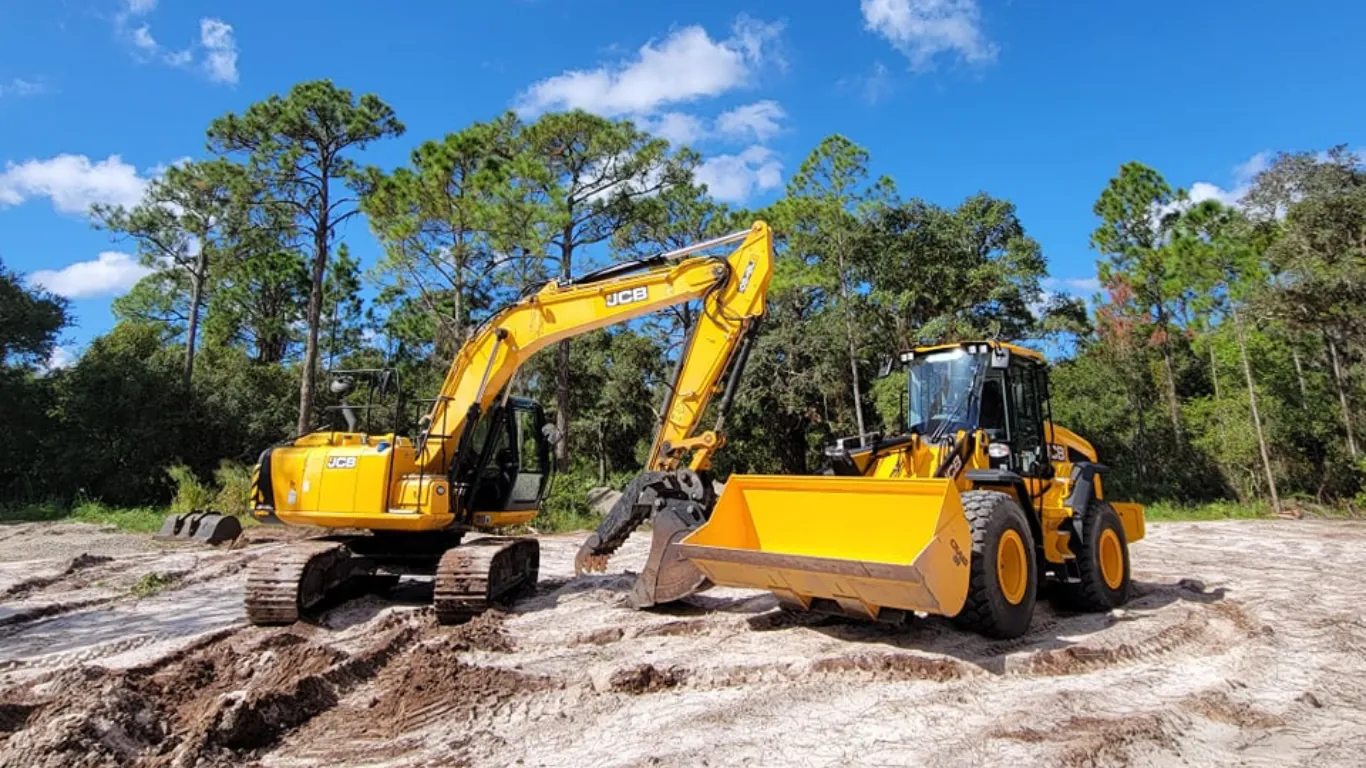
The equipment matters. Working in and along a waterway without wrecking the banks takes machines suited to it and operators who do it regularly. Our drainage canal maintenance crews do this year-round, alongside the lake and preserve side of the business.
This trips up more property owners than the work itself. Depending on where you are, a canal might be maintained by the county, a drainage or water control district, a CDD, an HOA, or the owners along it. Easement language in your deed or your community documents usually holds the answer, and it's worth finding before the wet season rather than during a flood while everyone points at each other. If it turns out the maintenance is yours or your association's, that's where we come in.
Canal work is a dry-season and early-summer job. Vegetation is manageable, access is easier, and capacity is restored before it's tested. Waiting until a named storm is on the map puts you in line behind every other panicked call, for work that's harder and pricier in standing water. Like most of what we do, the cheap version of this job is the scheduled version.
Every summer runs the same test on every drainage system in Sarasota County: weeks of near-daily rain punctuated by the occasional tropical downpour that asks a canal for everything it has. Systems maintained in the dry season pass quietly, and nobody thinks about them. Systems that skipped maintenance take the exam cold, and the grade arrives as standing water in yards, roads that flood at the same corner every July, and after-hours calls to whoever's responsible. The frustrating part, from where we stand, is that the failing systems usually announce themselves in advance: the vegetation was visible in April, the leaning willow over the channel was leaning in May, the culvert was already half-blocked before the first big rain. Flooding from a neglected canal is among the most preventable property damage in Florida. If you're reading this in the dry season, you're in the study period. Use it.
The bigger the system, the more the pieces interact, and nowhere is that clearer than on a golf course, where drainage, ponds, trees, and turf form one connected water machine. A blocked transfer between two ponds shows up as a soggy fairway three holes away. A canal that can't move water keeps greens wet longer after every rain. This is the work our company literally grew up on: ACI started on the water side, managing lakes, canals, and stormwater for courses and large communities, and the tree and land business grew out of it. For big systems, the win is a single contractor who sees the whole machine: aquatic vegetation, canal capacity, bank condition, and the trees along every waterway, inspected and managed on one calendar. Superintendents and CDD boards spend less time coordinating vendors and more time with a system that just works. That's the multi-year contract work that's kept us busy here for two decades, and it's the deepest bench we have.
For boards and owners who want the practical version, here's the cycle we run systems on. Late dry season in spring: the full inspection and the heavy work, vegetation knocked back through the whole channel, obstructions out, culverts and outfalls cleared, banks repaired while machines can reach them, and the leaning trees over the channel dealt with before wind season. Early wet season: a lighter confirmation pass, because the first real rains reveal anything the inspection missed, and small fixes now are cheap. During the season: after any major rain event, a quick walk of the known pinch points, culverts and outfalls first, since a blockage that forms in one storm is waiting for the next. Late fall: the wrap-up look, noting what the season did and what goes on next spring's list. None of these steps is exotic. Drainage systems don't fail for lack of clever engineering. They fail for lack of somebody showing up on a rhythm, and the rhythm is exactly what a maintenance contract buys.
Check ownership and easement first, because clearing a canal that isn't yours to touch can cause problems, and herbicide use near water without the right license is its own issue. A quick call to your county or district sorts out whose it is.
Growth here is year-round, so most systems want at least an annual cycle, with fast-growing stretches checked more often. We build schedules to the system, not a template.
Yes, and that's the advantage of one contractor for the whole corridor: aquatic vegetation, bank work, and the leaning oak over the channel are one scope instead of three vendors.
A channel that moves water and a paper trail that proves it: cleared flow line, treated vegetation, obstructions hauled, and a service report noting what was done and anything we flagged for next time, like a bank section starting to slump or a tree developing a lean over the channel. Boards and districts especially value the reports, because drainage responsibility questions get asked after floods, and 'here's our maintenance record' is the best answer that exists.
Responsible for a canal, or just tired of looking at one? Get a free assessment or text 941-445-3027 before the next wet season tests it.
The tree stood through the wind, but the damage that drops trees shows up weeks later.
The honest framework we use on every assessment: condition, structure, target, and species. Most trees don't need to come down, and we'll tell you so.
That widening gap between the lawn and the water isn't cosmetic. What causes Florida lake bank erosion, how restoration works, and why waiting costs more.
Text 941-445-3027 and ask the owner directly. Free, no obligation estimates.