
Is Stump Grinding Worth It? What Happens If You Leave the Stump
A leftover stump isn't neutral. It sprouts, attracts termites, wrecks mowers, and blocks replanting. What grinding costs and when to skip it.
· Land Clearing
People call asking for 'land clearing' and mean five different things, so the first thing we sort out on a site walk is what the land needs to become. That answer decides the method. Here's the difference in plain terms, and how we choose between them on real parcels around Venice.
A tracked machine with a rotary head grinds standing brush and trees into mulch, right where they stand. Nothing gets pushed into piles, nothing gets burned, nothing gets hauled. The parcel goes from overgrown to walkable in a pass, and the mulch layer stays down, holding moisture and knocking back regrowth. We run a large collection of company owned machines and operators with the industry gold standard Denis-Cimaf heads, which produce the fine, even finish the cheap drum grinders don't. Ground disturbance is minimal because roots stay in the ground, which also means less erosion on our sandy soils.
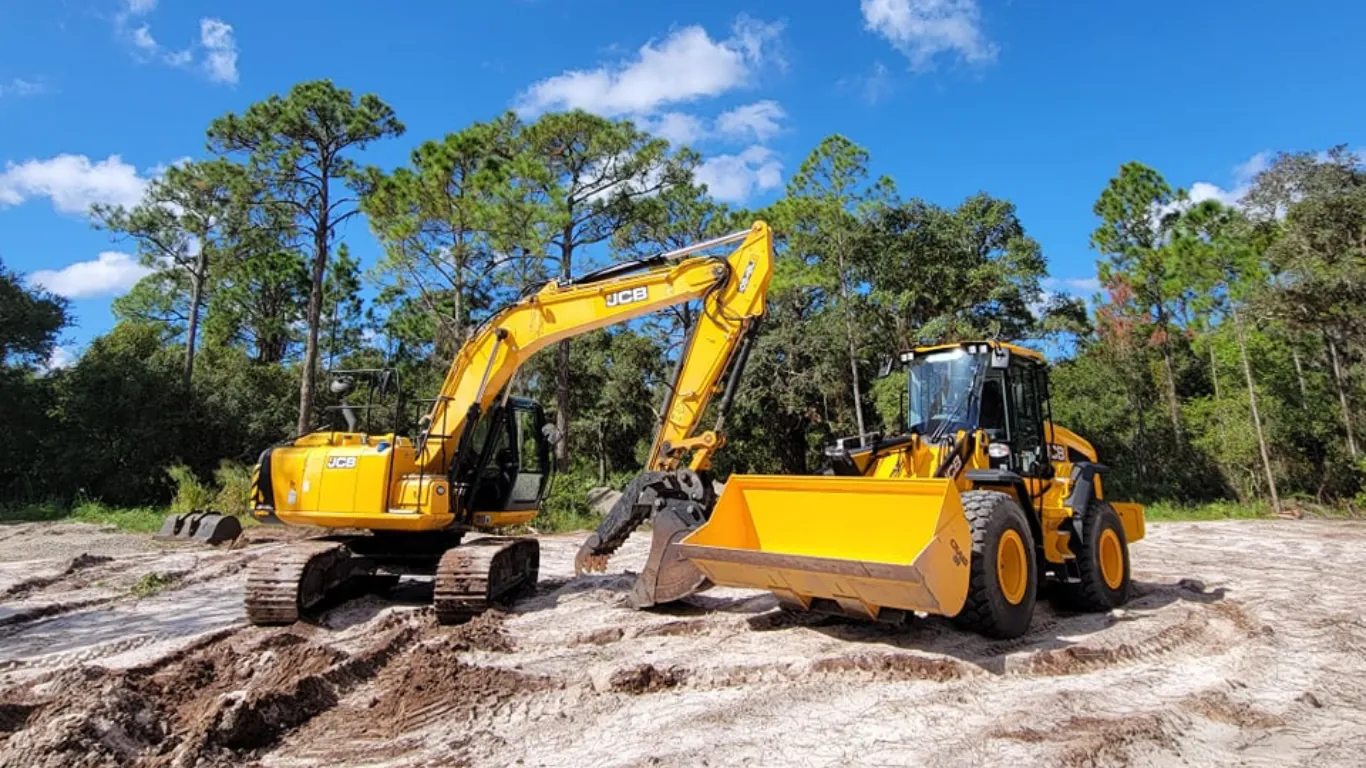
Excavators and grapple equipment take vegetation out whole, stumps included, and the debris leaves as logs and loads. What's left is bare dirt you can grade, compact, and build on. It's more invasive and there's real hauling involved, which makes it the more expensive path per acre. When the job ends in a slab, a driveway, or engineered grade, this is the method, often with fill dirt and grading right behind it.
Will anything be built where the vegetation was? If yes, roots and stumps have to come out, so it's traditional clearing at least under the footprint. If no, and the goal is access, views, pasture, fire mitigation, or just taming an overgrown parcel, mulching usually wins on speed, cost, and how the land looks after. A big share of our jobs are hybrids: mulch the bulk of the acreage, dig out the building pad and driveway.
Mulching leaves stumps ground to grade, and roots stay in the soil. It's not the tool for a building pad, and very large hardwoods are removal jobs, not mulcher jobs. Wet ground can limit the working season for any method. And a mulched parcel isn't maintenance-free: Florida regrows, so plan on periodic passes or follow-up treatment to keep it open.
Not all mulching is the same mulching. The head on the machine decides the finish. Cheap drum grinders tear vegetation into ragged chunks and leave a parcel looking chewed. The Denis-Cimaf heads we run cut and shred to a fine, uniform mulch that lays down like a groomed trail surface, and the difference is obvious the moment you see the two side by side. Operator skill compounds it: a good operator reads the parcel, works around keepers without scarring them, and leaves clean lines along edges and fence runs. On the traditional side, the equipment question is about matching machine size to the timber and having the grapple and hauling capacity to move debris efficiently, because an undersized clearing operation stalls on its own debris pile. We own our machines outright, all of them, which means the right tool shows up for your parcel instead of whatever the rental yard had available that week.
Whichever method you choose, the parcel starts changing the day the machines leave, because Florida never stops growing. On mulched land, the mulch layer suppresses regrowth for a while, but palmetto and vines push back and invasives try again, especially where birds perch. The economical pattern is a light maintenance pass every year or two, a fraction of the original job, that keeps the parcel in its cleared state indefinitely. On scraped land waiting for construction, unmanaged regrowth plus Florida sun turns bare dirt into weeds fast, so time the clearing near the build rather than years ahead. And on any parcel where invasives were part of the problem, follow-up treatment is part of the solution, since Brazilian pepper regrows from anything done halfway. We offer maintenance passes as scheduled work, and most owners who've paid for one full reclamation never want to pay for a second one.
How the decision plays out on actual parcels around here. Scenario one: five acres off River Road, palmetto and scrub oak, owner wants to see and use the land and maybe build in a few years. That's a mulching job, all of it, with the build-site question deferred until there's a site plan; mulching now doesn't prevent digging later. Scenario two: a half-acre infill lot in Venice with a house going up in six months. That's traditional clearing under the footprint, driveway, and septic, with the lot's two big live oaks kept, fenced, and mulched around, best of both methods on one small parcel. Scenario three: ten acres near North Port, half pepper thicket, pond at the back, owner wants pasture and water access. That's mulching for the acreage, invasive treatment behind it, and hand-selective work near the pond edge where machines shouldn't chew, plus a maintenance plan because pasture stays pasture only on purpose. Most parcels rhyme with one of these three. The site walk tells us which, and it's free.
Usually it's a benefit: it suppresses regrowth and holds soil. If you want areas raked clean or hauled, we can do that too, it just adds handling.
For brush and light timber, mulching almost always comes in under traditional clearing because hauling and disposal drop out of the equation. Once heavy timber or stump removal enters the scope, the gap narrows. The site walk settles it, and ours are free.
Yes, that's one of the method's best tricks. Flag what stays, we clear everything else around it.
Often, yes. Tracked mulchers spread their weight well and handle damp ground better than most heavy equipment, which extends the working season meaningfully. Genuinely saturated parcels still wait for a dry stretch, because working soup rutts land and does nobody any favors. We'll tell you honestly at the site walk whether your ground is workable now or worth a few weeks' patience.
Selective mulching is the gentler path: it keeps canopy trees, works in daylight passes that give animals time to move, and leaves a mulch layer that ground life recolonizes quickly. If your parcel has active nests, dens, or anything protected, flag it and we'll work around what the rules and plain decency require. Most owners doing view or access clearing end up with more usable habitat edge than they started with, not less.
Site walk, every time. Send the parcel address and any survey you have, we'll walk it with you, and the quote comes back in writing naming the method, the finished condition, and the number.
Overgrown parcel, big plans, or both? Request a free site walk or text 941-445-3027.
A leftover stump isn't neutral. It sprouts, attracts termites, wrecks mowers, and blocks replanting. What grinding costs and when to skip it.
Land clearing pricing depends on density, terrain, disposal, and what the land is being cleared for.
Buying a lot in Venice or North Port and planning to build? What site clearing involves, what it costs, and the mistakes that show up under the slab later.
Text 941-445-3027 and ask the owner directly. Free, no obligation estimates.