
Forestry Mulching vs. Traditional Land Clearing: Which One Do You Need?
One grinds vegetation in place, the other scrapes and hauls. The right choice depends on what the land is for.
· Land Clearing
Per-acre land clearing quotes get thrown around loosely, and they're nearly meaningless without seeing the parcel. An acre of thin palmetto and an acre of mature hardwood hammock aren't within shouting distance of each other on price. These are the things that set the number, so you can read quotes like someone who's done this before.
The single biggest variable. Light brush and palmetto clears fast. Pine flatwoods run heavier. Dense hardwood hammock with mature oaks means big machines, big timber handling, and real time. Invasives like Brazilian pepper thicken a parcel shockingly fast and often grow in tangles that fight the equipment. When we walk a property, we're mostly reading density: it tells us the machine, the days, and therefore the price.
This is Southwest Florida; a lot of parcels hold water part of the year. Wet ground limits which equipment can work without bogging or rutting, and sometimes dictates which season the job should run. Low, wet parcels can also involve protected wetland areas where clearing rules apply, something to confirm with the county before work is scoped. It's one more reason the site walk matters. Our background on the water side, managing lakes and preserves, means wet parcels don't surprise us.
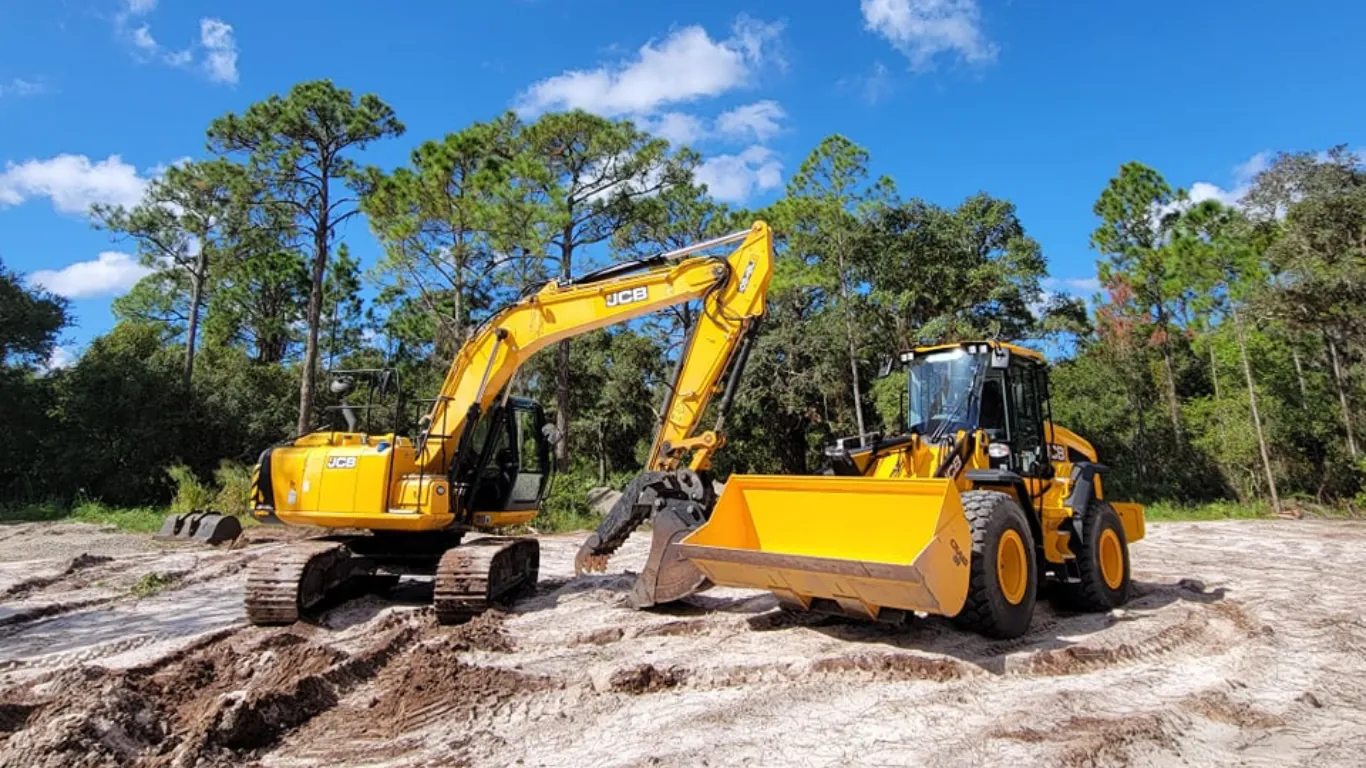
Disposal is the quiet cost center of land clearing. Hauling debris off-site costs real money in trucking and dump fees. Forestry mulching changes that math: the machine grinds standing vegetation into mulch that stays on the ground, so there's often nothing to haul at all. For a lot of parcels it's the fastest and most economical route, and the finished look is clean. We run a large collection of company owned machines and operators with the industry gold standard Denis-Cimaf heads, so mulching isn't a subcontracted afterthought for us, it's a core service.
Clearing for a home site is a different spec than clearing for pasture, a view, or fire mitigation. A build site may need stumps out, grade work, and fill dirt brought in. A view clearing might keep the best trees and mulch everything under them. Selective clearing takes more finesse than scraping everything, and the spec drives the price as much as the acreage does.
A site walk takes half an hour and answers most of the pricing question. We're reading density first: how thick, how tall, how much of it is real timber versus brush the mulcher eats without slowing down. Then ground: where water sits, where the soil goes soft, whether a machine can work the whole parcel or needs to stage from the dry side. Then the keepers: which oaks and pines are worth designing around, because a parcel that keeps its best trees is worth more finished than one scraped flat. Then edges and access: where equipment enters, what's near the property lines, what the neighbors' side looks like, any structures or fences to protect. By the end of the walk we can usually tell you the method, the machine, the rough days, and the number, on the spot for smaller parcels and in writing within days for bigger ones. Bring your survey if you have one; boundaries beat guesses.
Clearing jobs schedule around weather and ground conditions more than most trades. Dry season is prime time: firm ground, full equipment options, and predictable progress. In the wet season we still work steadily, but soft parcels sometimes wait for a dry stretch, and it's better to plan that honestly up front than rut a property to save a week. Once the machines are on site, progress is fast and visible: brush and palmetto parcels transform in a day or two, heavier timber takes longer. If your clearing feeds a build schedule, tell us the real dates and we'll sequence around them, including coordinating with your builder on what finished condition they need. The expensive version of a clearing timeline is the one nobody talked about until the pad was due.
When a clearing quote comes in suspiciously low, the money is usually hiding in one of a few places, so check them before you sign. Disposal is the classic: 'clearing' that leaves windrows of pushed-over debris along your property line isn't a finished job, it's a relocated one, and paying someone else to haul it later erases the savings. Stumps are the second: knocked-down trees with stumps left at grade look cleared until you try to do anything with the land. Ruts and damage are the third: a crew with the wrong machine for wet ground can leave a parcel needing grade repair that costs more than the price difference. And insurance is the evergreen one, same as tree work: land clearing runs big machines near property lines, fences, and occasionally neighbors' irrigation, and the uninsured low bidder's oops becomes your claim. Our quotes name the finished condition in writing: what's mulched, what's hauled, what's ground, what the surface looks like when we leave. Compare that line, not the total.
Yes. Selective clearing is a lot of our work: keep the grand oaks, lose the scrub and invasives underneath. The parcel ends up looking like a park instead of a moonscape.
Depending on jurisdiction and the parcel, possibly, especially where wetlands or protected trees are involved. Confirm with your county or city before scoping work. We can tell you what questions to ask.
With the right machine, brush and palmetto move quickly, often acres per day. Heavy timber runs slower. We'll give you a timeline with the quote.
Usually, and often more than it costs. A parcel buyers can walk, see across, and imagine using shows better than a wall of scrub hiding the same acreage, and mulched land photographs particularly well for listings. Selective clearing that reveals good trees is the high-return version. Talk to us and your realtor about what the market in your area rewards; a partial clear aimed at showability is sometimes the smartest spend.
Yes, and it's one of the practical reasons to call us specifically: the same company that mulches the acreage can take down the dead pines, trim the keeper oaks, and grind the stumps, in one mobilization with one point of accountability. Parcels rarely sort themselves neatly into 'clearing work' and 'tree work,' and hiring by the label usually means paying two contractors to coordinate around each other.
Both. A quarter-acre backyard reclamation is a normal job for us, not a minimum-charge insult. Small parcels often price better than owners expect because the right machine makes short work of them.
Have a parcel in mind? Book a free site walk or text 941-445-3027 with the address and we'll take a look.
One grinds vegetation in place, the other scrapes and hauls. The right choice depends on what the land is for.
Sometimes. Tree rules differ between the City of Venice, Sarasota County, and your HOA, and they change. Find out before you cut.
What actually drives tree removal pricing in Venice: size, access, condition, and what's underneath it. And why the cheapest quote is often the expensive one.
Text 941-445-3027 and ask the owner directly. Free, no obligation estimates.