
Lake Bank Restoration & Erosion Repair
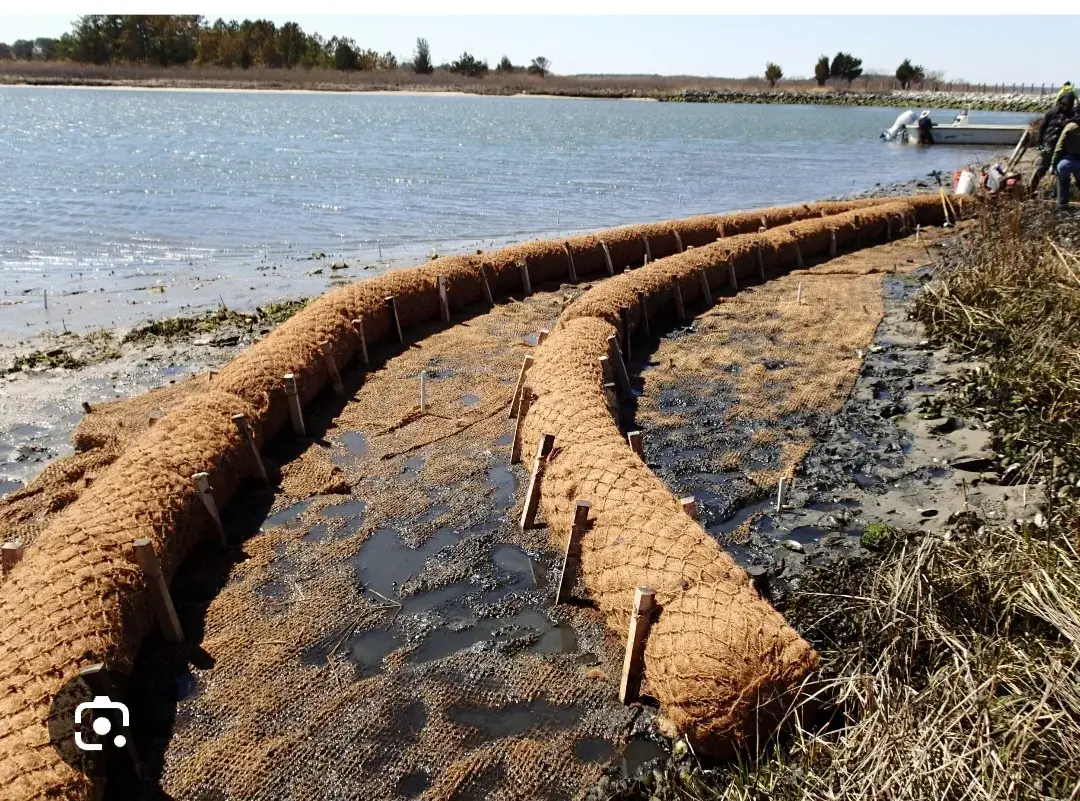
ACI rebuilds eroded retention pond and lake banks with regrading, rip rap, coir logs and the PondTech plank system, priced by the linear foot.
See Lake Bank Restoration →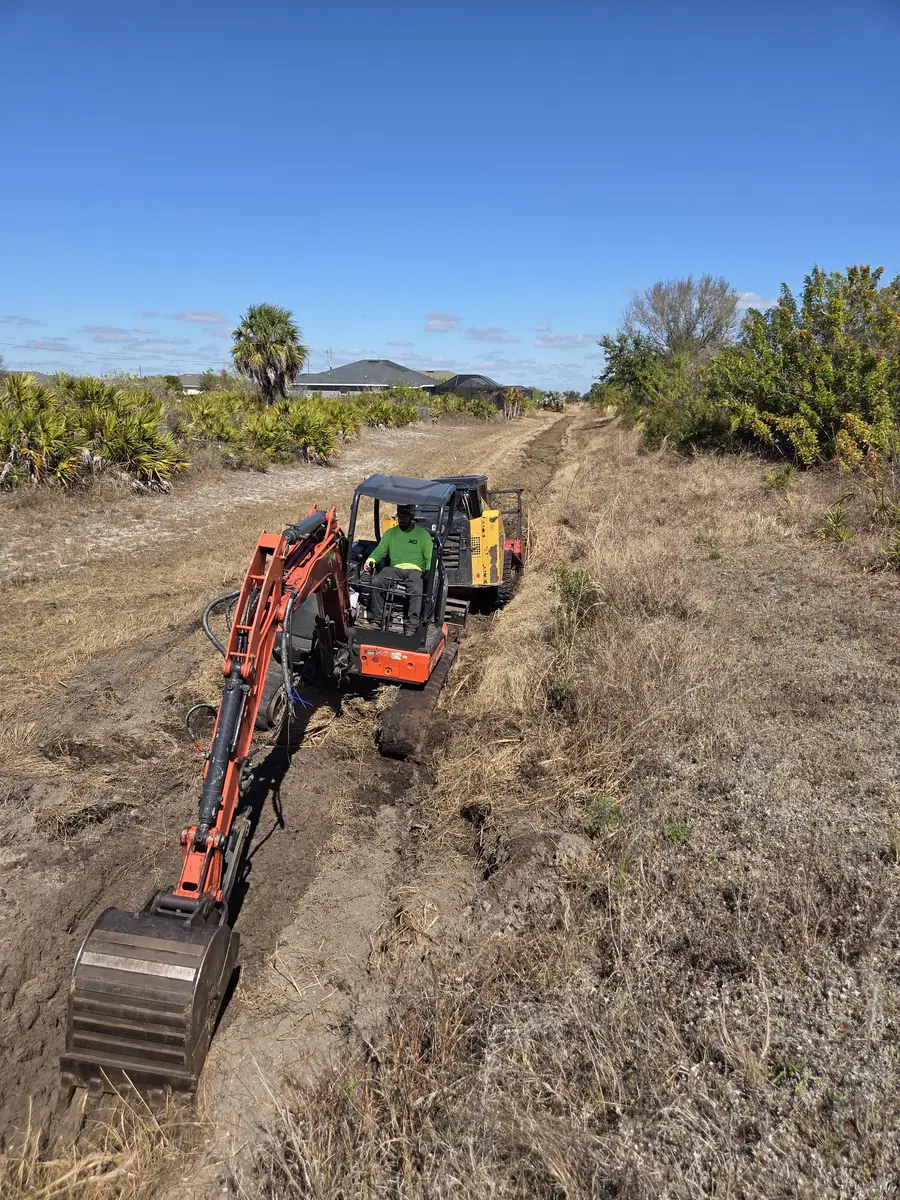
We clear years of tree growth and sediment out of neglected ditches, swales and canals so stormwater moves the way the system was built to move it.
Drainage ditch and canal maintenance in Punta Gorda, FL. Bank clearing, exotic removal, licensed aquatic herbicide work. We cover 33950, 33955, 33980 and the rest of Punta Gorda. ACI has worked Charlotte County for 23 years, out of Venice. Free estimates, no obligation, and someone answers 24 hours a day. Text 941-445-3027.
Drainage here is split between Charlotte County, the City of Punta Gorda and the communities themselves, so for the ditch behind your HOA greenbelt, we check your plat before we quote. In Deep Creek, Burnt Store Lakes and Burnt Store Village the drainage runs through platted easements and greenbelt tracts, and out in Charlotte Ranchettes it is roadside ditch along a dirt road with no association at all. The ground here has almost no fall to it, so a ditch that is half grown in does not drain slowly. It stops.
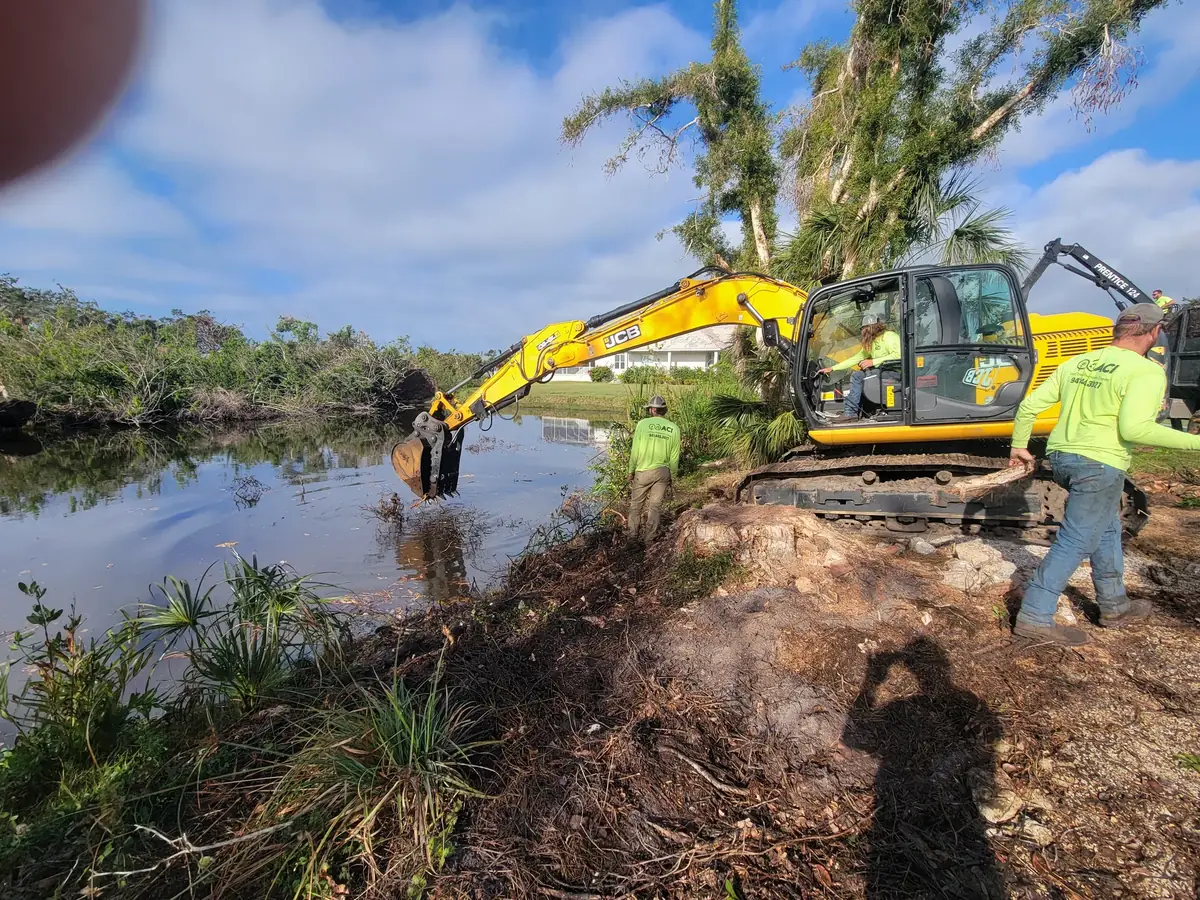
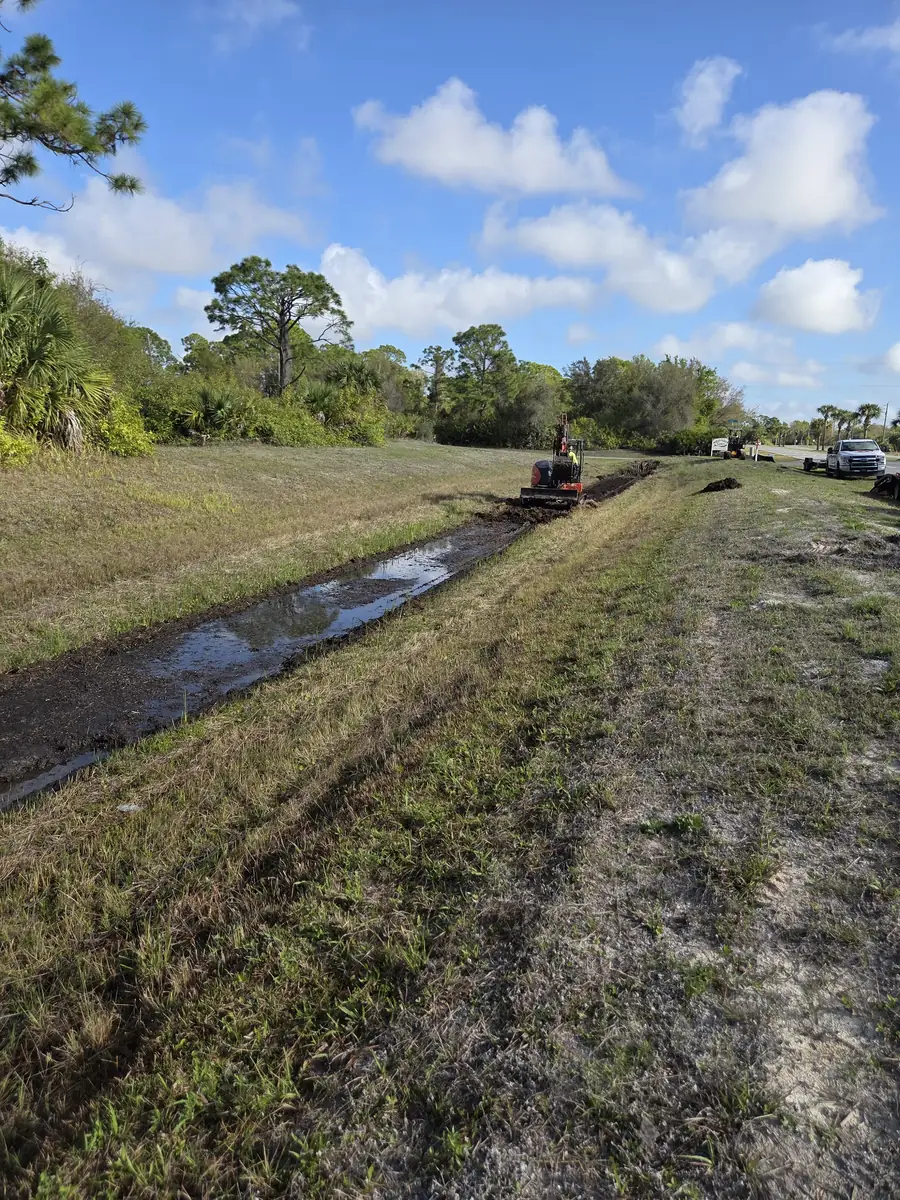
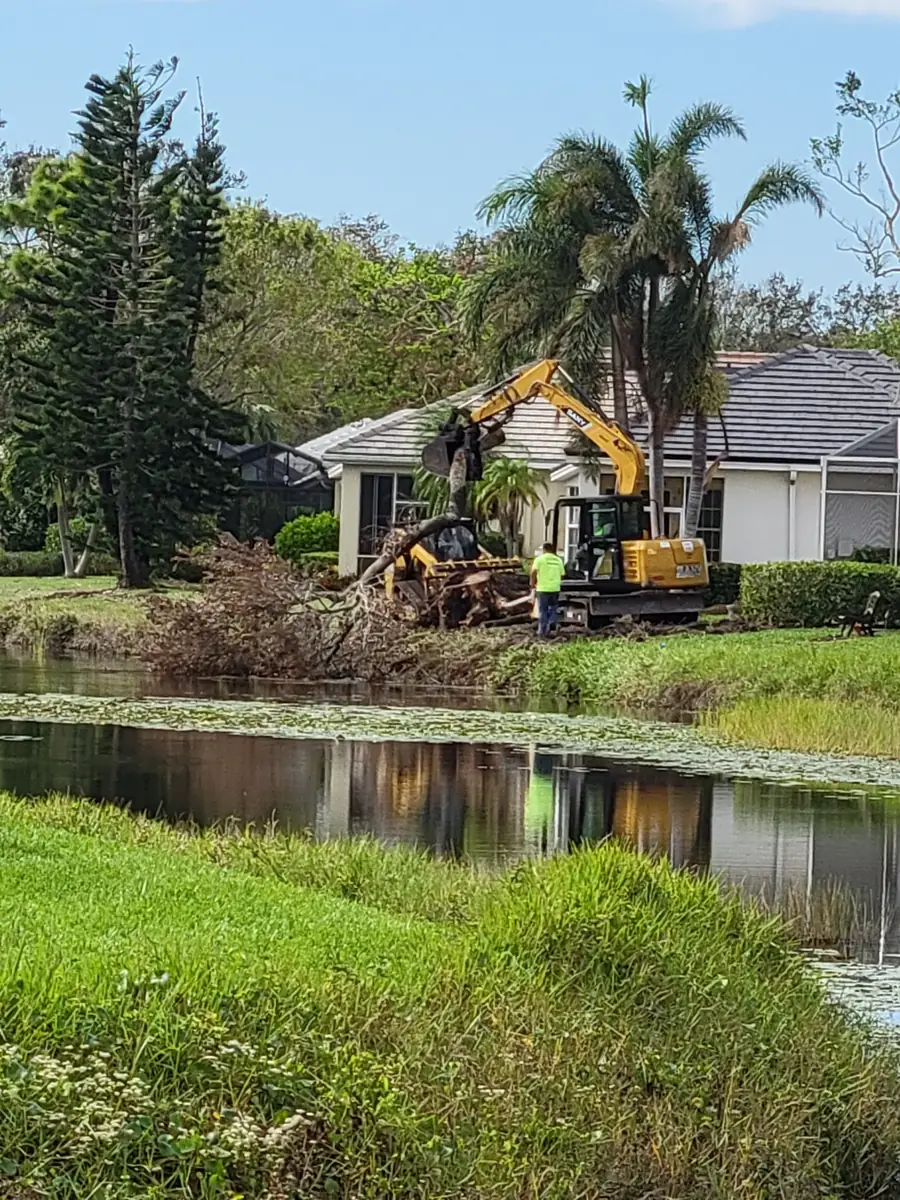
We clear ditch and canal banks, take out the Brazilian pepper and volunteer trees that have closed the channel, cut back cattail and shoreline growth, and mulch or haul the material depending on access. Where the fix is chemical rather than mechanical we handle it in house, under our State Licensed Aquatic Herbicide Applicator credential. Where a bank has sloughed in and narrowed the channel we can rebuild it. The right time to do this in Punta Gorda is spring, before the wet season, not the week after a storm when every ditch in Charlotte County is on somebody's list. Boards that get on a yearly cycle with us stop having emergencies.
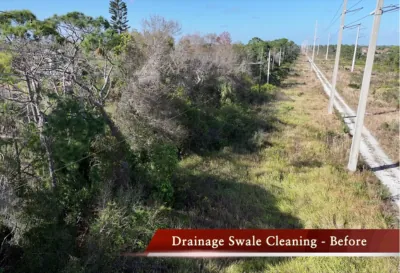
Two patterns come up over and over here. The first is a greenbelt ditch in Deep Creek or the Burnt Store communities that nobody has walked in five years, where pepper and volunteer oaks have grown out from both banks until the channel is a tunnel. The second is a rear easement between two rows of houses where the homeowners have quietly planted into it and the water has nowhere to go.
Neither one is a mowing problem. Both need the woody growth taken out, the bank shape put back, and then a schedule so it does not happen again. We work with association boards and management companies on exactly that, and a large portion of it turns into multi year repeat business.
Most systems we get called out to look at failed the same slow way. Sediment washes in and settles. The bottom rises a little at a time until the low point is no longer the low point. Grass, cattails and volunteer trees root into that new soil and hold even more of it in place. A driveway culvert silts shut, or was never put in. Sod, fill and grass clippings get pushed into the swale year after year.
Any one of those on its own is minor. Stacked up over the years they take a system that was built to move a big rain and turn it into a shallow bowl. That is why the water sat in the yard and would not go anywhere.
We start at the outfall and work back from it. Knowing where the water is supposed to end up tells us what the grade has to be everywhere upstream. Then we open the corridor, take the growth off the banks and out of the bottom, and dig the built up sediment with an excavator sized to the site.
Spoil gets hauled off, or spread and graded where you want it. Side slopes get shaped so they hold instead of sliding back in. Where there is heavy shoreline and aquatic growth we follow the dig with a herbicide program, applied under our state license, so the same growth does not close the channel back up behind us.
A lot of this work is for HOA and condo boards, community development districts, property managers and municipalities. In most residential communities the developer built the stormwater system under a state environmental resource permit, and the plans and maintenance records that go with it describe the system you are supposed to have. In most of our area those permits come from the Southwest Florida Water Management District.
If your board has never seen those documents, you are not alone. It is worth finding them before anyone moves dirt. We do that research as part of the estimate.
We also work for homeowners on a swale that has grown shut and for landowners with an old agricultural ditch. Same job, smaller.
A large portion of our drainage work is repeat business, and that is on purpose. Once a system is back at grade, holding it there is a much smaller job than digging it out again. For most communities that means a herbicide pass to keep the growth down and a walk of the trouble spots after the wet season.
It is also the easier number for a board to budget. A small line item every year is simpler to approve than an emergency dig out in the days after a storm.
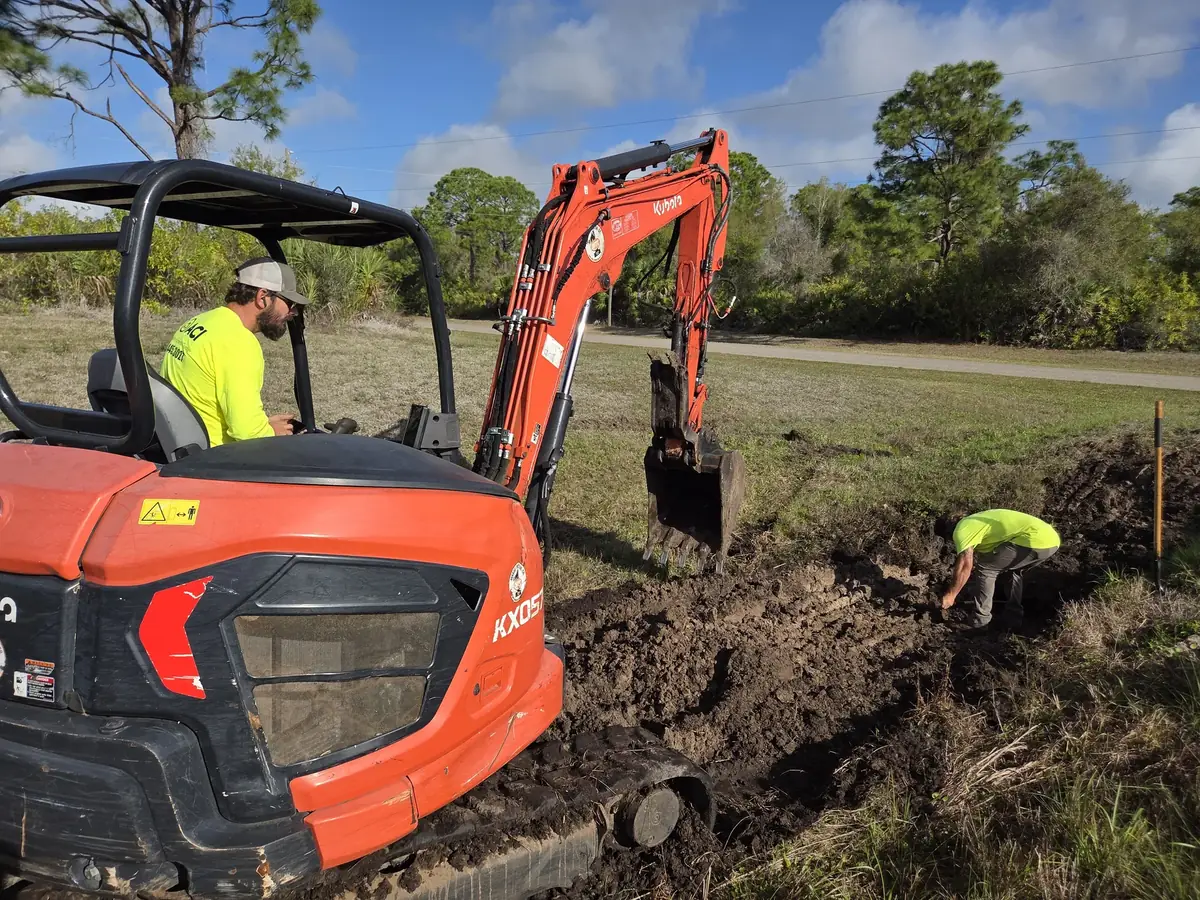
We own our equipment, so the machine that shows up is the one that fits your site instead of whatever the rental yard had that week. That ranges from a mini excavator that works between a house and a fence line up to iron that handles a full community canal.
We are also a state licensed aquatic herbicide applicator, which not every excavating outfit carries. One company handles the dig and the vegetation control, so there is nobody to point a finger at when the growth comes back.
4.9 stars from 142 Google reviews.
What a great company. Adam and his team do an amazing job. We had a weir that our HOA manages and has to keep clean for storm water flow. Adam came, walked the whole area and gave us an assessment of what needed to be done. He turned around a proposal within 48 hours, and a time line to get started. CJ his foreman arrived at the stated time and got to work. We were amazed at how hard they worked each day. They were able to finish a day ahead of schedule. Very pleased and would recommend Adam and his team to anyone needing his services.
Because the system that was permitted and the system you have today are usually two different things. Sediment, tree growth and blocked culverts shrink the capacity a little at a time. The design may have been fine. The condition is what failed. We measure what is out there now against what was intended and show you the gap.
It depends on the community and the jurisdiction, and the answer is written down somewhere: your plat, your association documents, or your city or county. We find it with you and walk the system before anyone spends money.
A single residential swale is usually short work. A long canal runs much longer, and we schedule it in sections so the system keeps draining while we work. You get a timeline with the estimate, not after we start.
We pick the smallest machine that can do the work and we plan the access route with you first. Some rutting is normal on soft ground. We regrade the access when we finish and the site gets cleaned up before we leave.
Both. We hold a state aquatic herbicide applicator license. On most jobs the first cleanup is mechanical and herbicide handles the regrowth, which is what keeps the channel open between visits.
Yes, and that is the right time for it. Call early. Once the rain starts the sites go soft and every board in the county wants the same crews. We also run emergency service 24 hours a day if something is already blocked and you have water where it should not be.
That comes down to your plat and where the ditch sits. We read your plat with you, and if the ditch is yours we quote it.
Spring, before the wet season starts. Getting the channel open in May is a scheduled job. Getting it open in August after a week of rain is an emergency, and so is everybody else's.
Yes. We hold a State Licensed Aquatic Herbicide Applicator credential, so the water side is in house rather than subbed to another company. That matters for accountability when a board is signing off on treatment near a lake people fish in.
We work across Sarasota, Charlotte and Manatee Counties, and travel further for storm work.
ACI rebuilds eroded retention pond and lake banks with regrading, rip rap, coir logs and the PondTech plank system, priced by the linear foot.
See Lake Bank Restoration →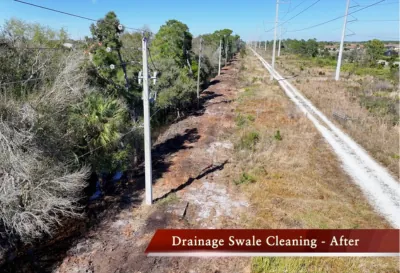
Monthly lake and pond care with quarterly preserve inspections, built to control invasive plants and keep your stormwater system working.
See Lake & Preserve →
We bring in fill, set the grade and compact it, so your house pad, driveway or parking area sits on ground that drains right and stays put.
See Fill Dirt & Grading →Free, no obligation estimates. 24/7 emergency service.