
Lake & Preserve Management
Monthly lake and pond care with quarterly preserve inspections, built to control invasive plants and keep your stormwater system working.
See Lake & Preserve →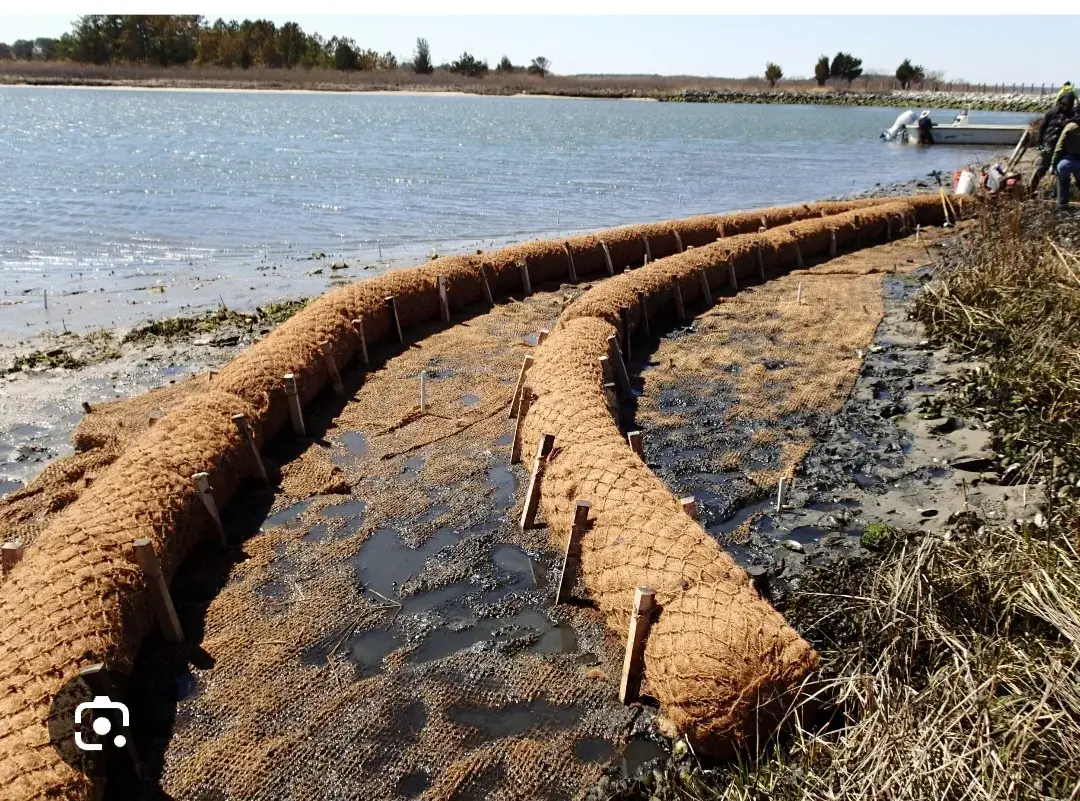
ACI rebuilds eroded retention pond and lake banks with regrading, rip rap, coir logs and the PondTech plank system, priced by the linear foot.
Lake bank restoration and erosion repair for Lakewood Ranch CDD and HOA ponds. $50 to $100 per linear foot. PondTech plank system, licensed only through us. ACI has worked Manatee County for 23 years, out of Venice. Free estimates, no obligation, and someone answers 24 hours a day. Text 941-445-3027.
Lakewood Ranch was platted around its stormwater. The ponds are not an amenity bolted on at the end, they are the drainage system, and nearly every village has one cut into the back of it. The named water is the part people know: the 160 acre Lake Uihlein at Edgewater, Summerfield Lake and Heron Lake inside Heron's Nest Nature Park, Trophy Lake and Otter Lake flanking Lakewood Ranch Boulevard south of the Braden River, Kingfisher Lake out at Waterside. The rest are working retention ponds behind the houses, and a lot of them have a bank that is quietly moving.
The causes repeat across the Ranch. Heavy mowers riding the crown of the bank compress it. Wind and wave action undercut the toe. Sod runs to the water line with nothing rooted deep enough to hold. Then the soil that leaves the bank settles in the pond and takes away the capacity the pond was dug to provide, which is the part boards care about at budget time. We repair the bank and we fix the reason it failed, not just the notch you can see from the lanai. Lake bank restoration and erosion repair runs $50 to $100 per linear foot, depending on how deep the failure goes, what access looks like and what the finished bank has to hold. We also install the PondTech plank system, a proprietary product licensed, installed and only available through our company. The planks go in subsurface, hold the soil and help move water to the pond without it causing surface erosion.
Most of these ponds are district or association infrastructure, so the decision runs through a board, a budget cycle and a meeting agenda. We are used to that. We measure the failure in linear feet, put the scope and the number in writing, and give you something you can hand to supervisors without translating it first.
Littoral shelf plantings on Ranch ponds come under the Southwest Florida Water Management District, and on the Manatee side these ponds drain toward the Braden River, which runs west into the Manatee River. Bank work gets done with both in mind, which usually means restoring the shelf as part of the repair rather than armoring straight over it.
A stormwater pond is built with a gentle slope for a reason. That slope holds sod, slows runoff before it reaches the water, and keeps the edge stable. Once the bank starts to cut back the slope steepens, the sod loses its footing, and the pond fills with the material it lost.
The damage rarely stops at the waterline. Catch it early and the repair is a fraction of what it costs after the edge has moved.
There is no single right fix. It depends on how much bank is gone, how much wave action the pond takes, what the water level does through the year, and what the association has to spend. Here is what we install.
This is usually the first question a board asks and it is a fair one. A common repair around here is a sock tube filled with sand laid along the shoreline. Those tubes can split and lose their sand in five to seven years, and then the association pays for the same stretch of bank twice.
We would rather tell you up front what each option gives you. Rock does not rot. Coir is organic and is meant to hold the bank while plants take root and take over. The plank system exists because customers were tired of the repair coming back around as a line item every few years.
We price by the linear foot so the number is easy to put in front of a board. We walk the site with you or with your manager, mark what needs attention now and what can wait a season, and put it in writing. Nobody has to guess what they are voting on.
Crews arrive in uniform in clean lettered trucks, work around residents and cart traffic, and clean up at the end of the day. We carry workers compensation and general liability insurance and can send certificates before we mobilize.
Plenty of contractors bidding your pond install one thing, usually a sand filled sock tube, because it is the only thing they carry. We carry several systems and we take the time to explain each one, what it costs, and how long it should hold. Boards often find that a different approach fits the budget better than the traditional method.
We also install the PondTech plank system, which is a proprietary product licensed, installed and only available through our company. The planks go in subsurface and help move water to the pond without it causing surface erosion. It came out of watching customers react to the same erosion over and over. They wanted something that helps keep it from starting again, so we went and found it.
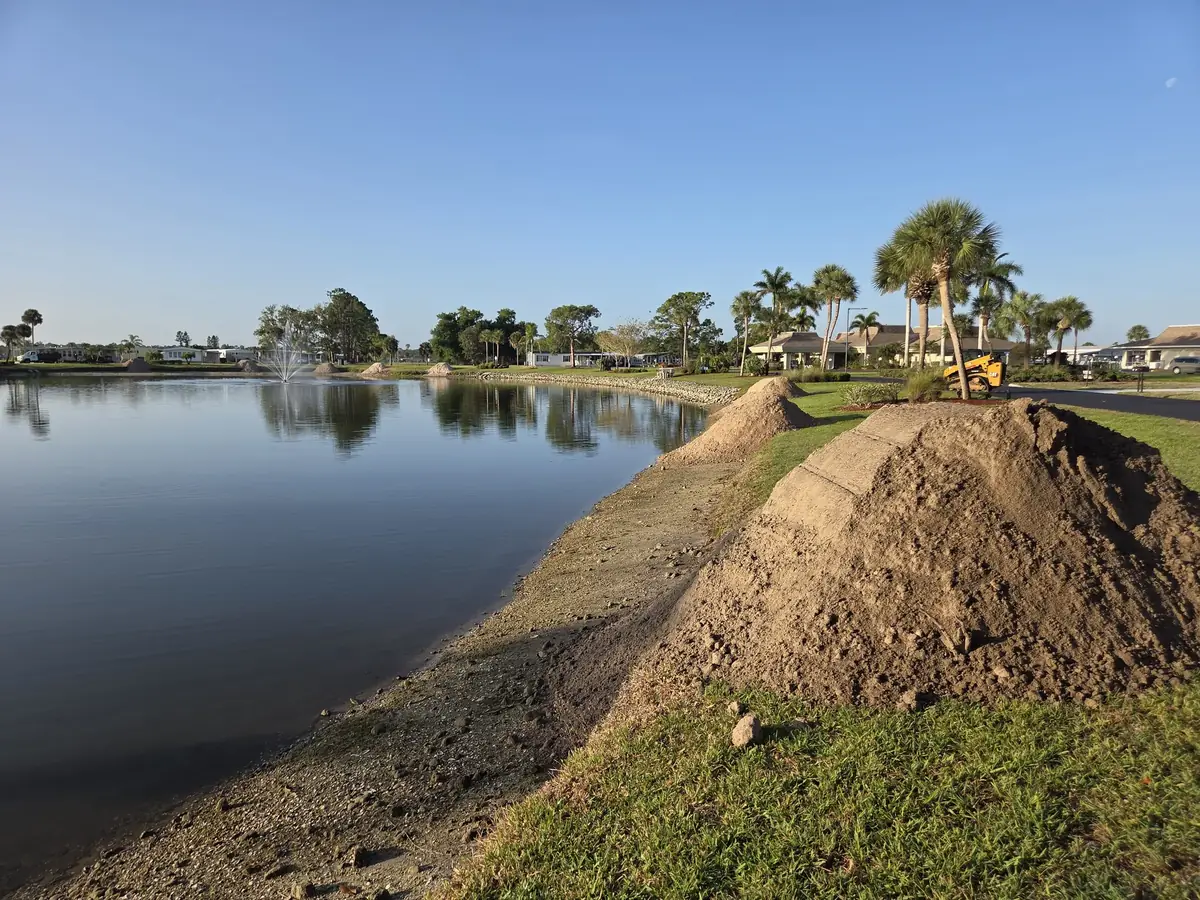
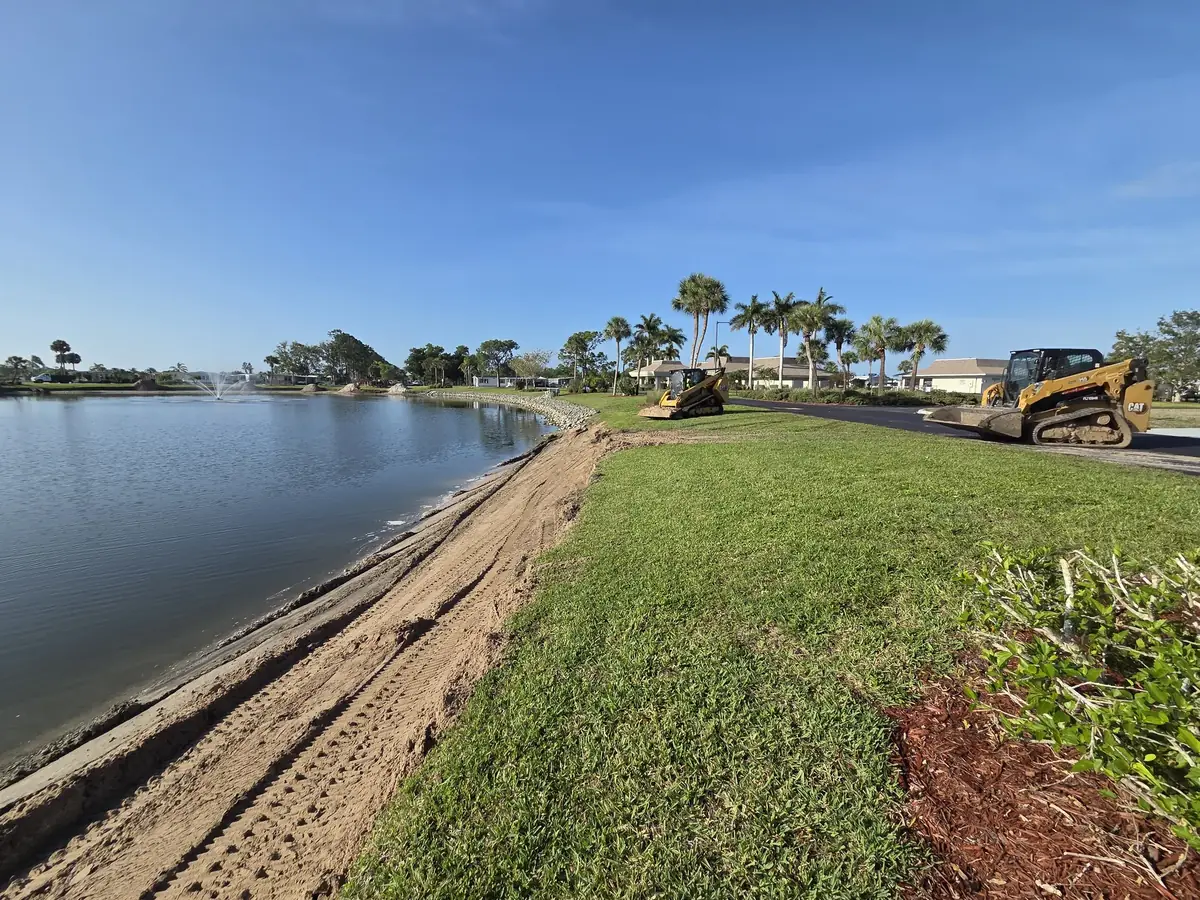
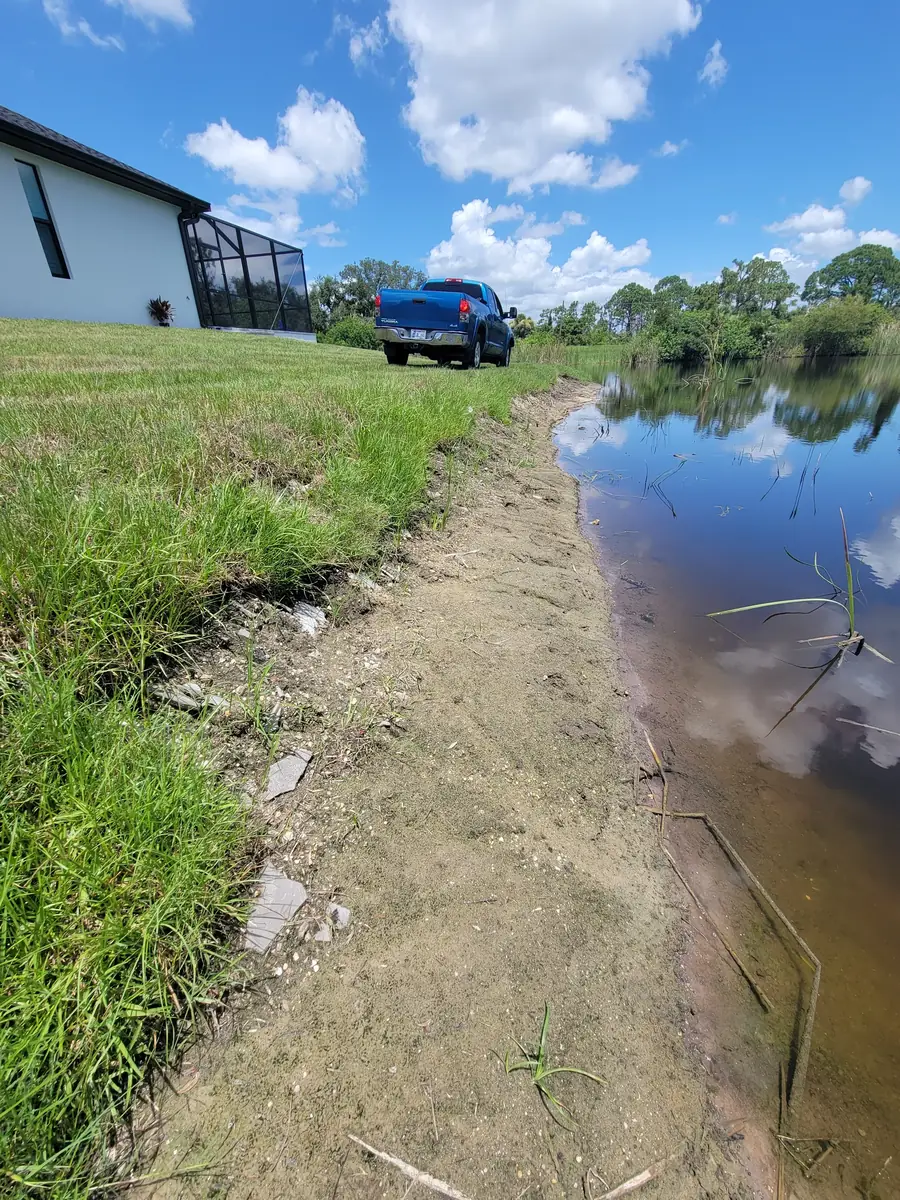
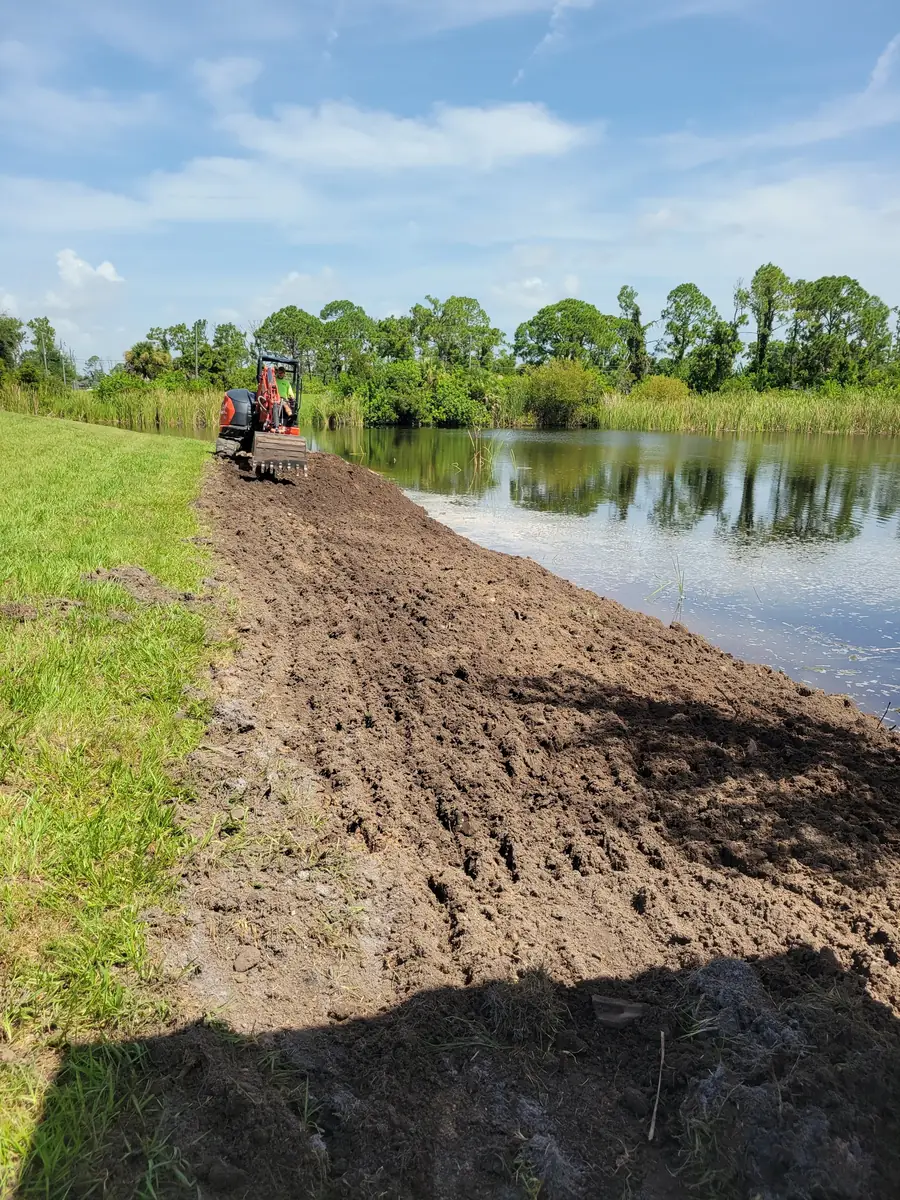
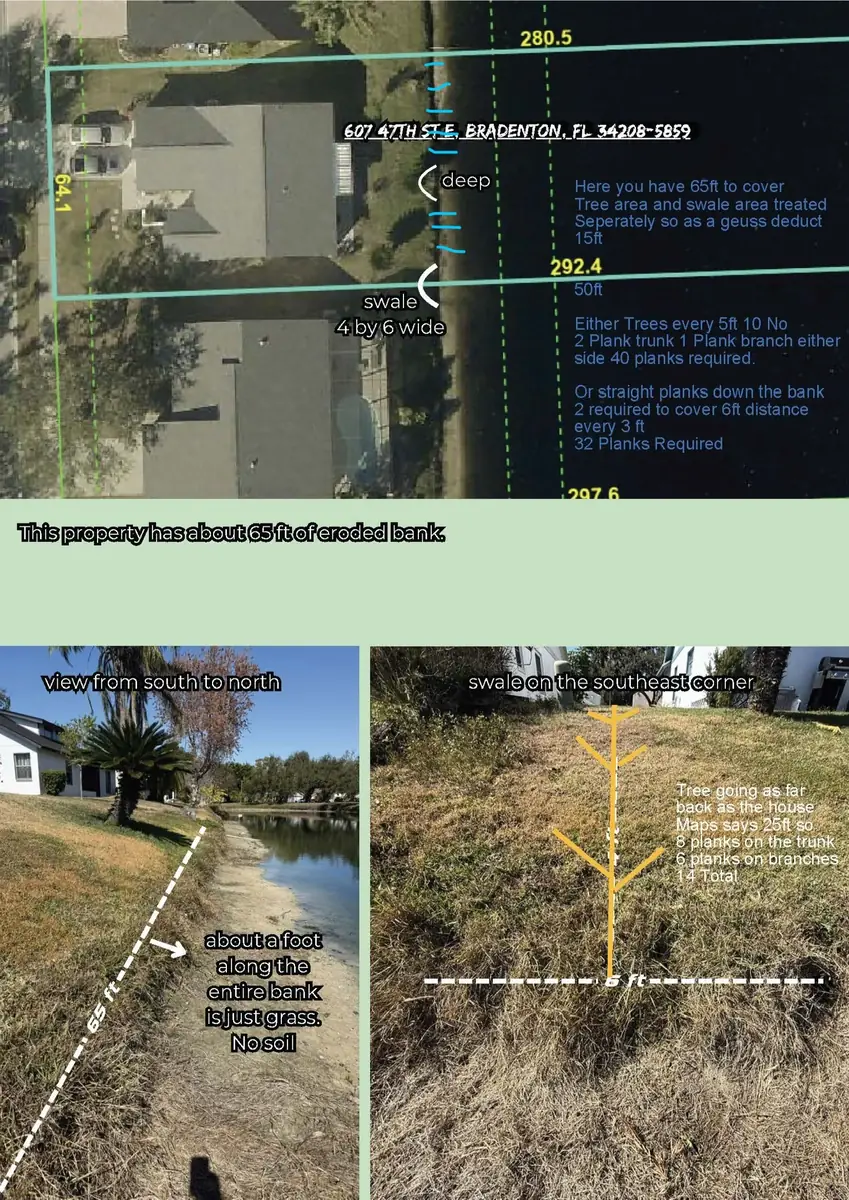
It depends on what goes in. A sand filled sock tube, which is a common install around here, can split and lose its sand in five to seven years. Rock and the PondTech plank system are built to hold up better than that. We will tell you what to expect from each option before you pick one.
Lake bank work generally runs $50 to $100 per linear foot depending on the treatment, the access, and how much fill the bank needs. We measure the run and give you a written estimate at no charge.
That is why we started installing the PondTech plank system. Regrading and rock repair the damage that is already there. The plank system goes in along the bank to help head off the next round of it. The customers who ask for it are usually tired of reacting every few years and want something proactive.
Yes. A large portion of our work is repeat business with the same communities year after year. We are used to board meetings, budget cycles, and scheduling around residents and play.
We size the equipment to the site and stay off what we do not need to touch. Anything we disturb gets put back, and the crew cleans up before it leaves. Residents will see uniformed people and lettered trucks, so there is no question who is out there.
Sometimes, depending on the water body and repair scope. We will walk the site and flag the agencies to check before work is scheduled.
By the linear foot, $50 to $100. The range moves with how deep the failure runs, how much of the toe is gone, whether we can get equipment to the bank, and what the finished bank has to hold back. We measure the run and give you a fixed number the board can vote on.
Because the repair fixed the notch and not the cause. On Ranch ponds it is usually mower traffic on the crown, no rooted planting at the water line, and wave action undercutting the toe. Address one and skip the others and you are back next season. We look at the whole shoreline before quoting a section of it.
It is a plank system installed subsurface to hold the soil and help move water to the pond without it causing surface erosion. It is a proprietary product licensed, installed and only available through our company. It suits a lot of Ranch ponds, where banks are steep and mowed right down to the water.
We work across Sarasota, Charlotte and Manatee Counties, and travel further for storm work.
Monthly lake and pond care with quarterly preserve inspections, built to control invasive plants and keep your stormwater system working.
See Lake & Preserve →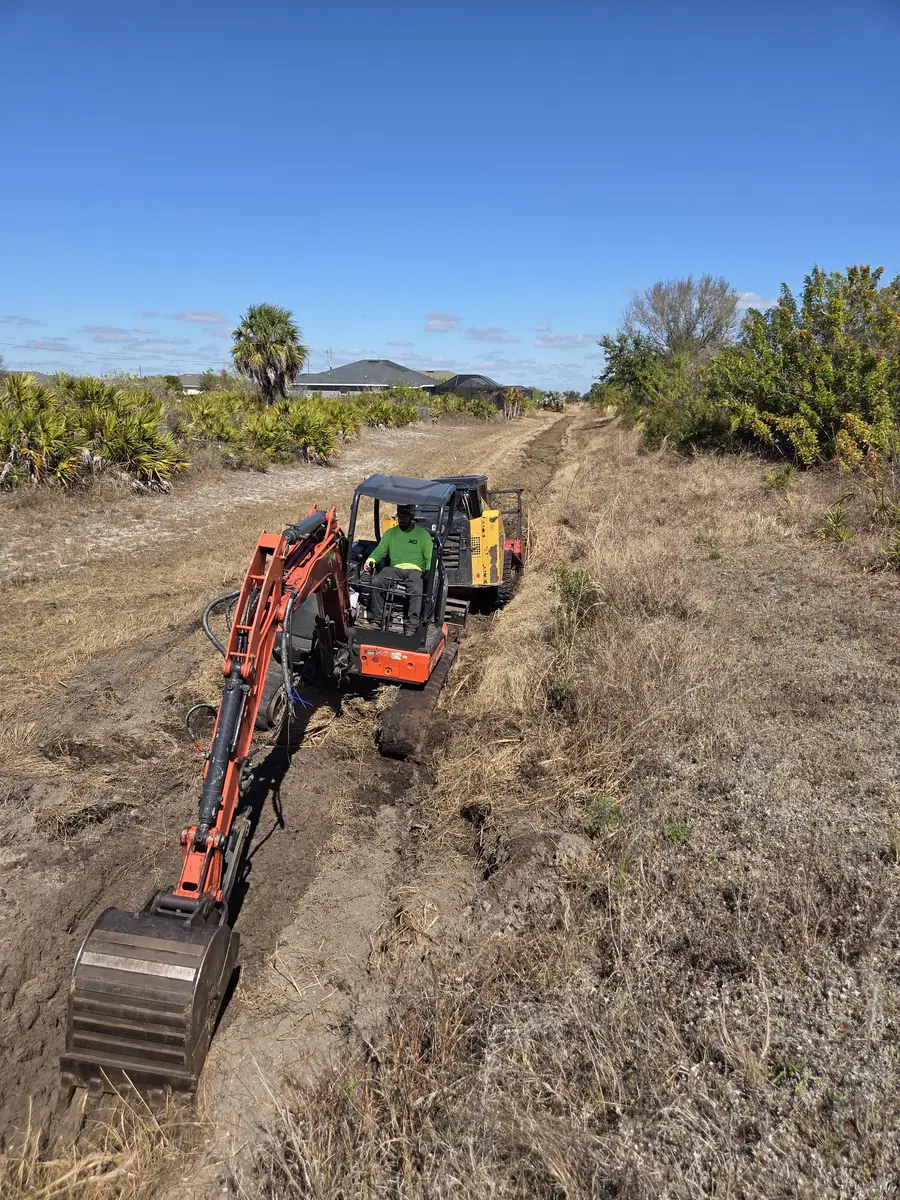
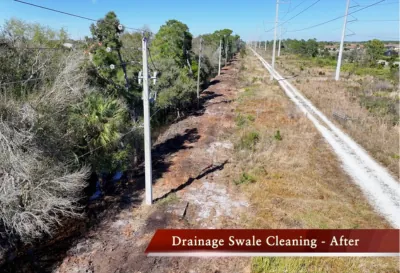
We clear years of tree growth and sediment out of neglected ditches, swales and canals so stormwater moves the way the system was built to move it.
See Drainage & Canals →
We bring in fill, set the grade and compact it, so your house pad, driveway or parking area sits on ground that drains right and stays put.
See Fill Dirt & Grading →Free, no obligation estimates. 24/7 emergency service.