
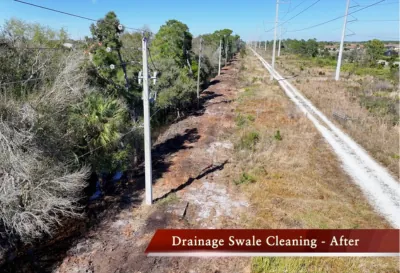
Lake & Preserve Management
Monthly lake and pond care with quarterly preserve inspections, built to control invasive plants and keep your stormwater system working.
See Lake & Preserve →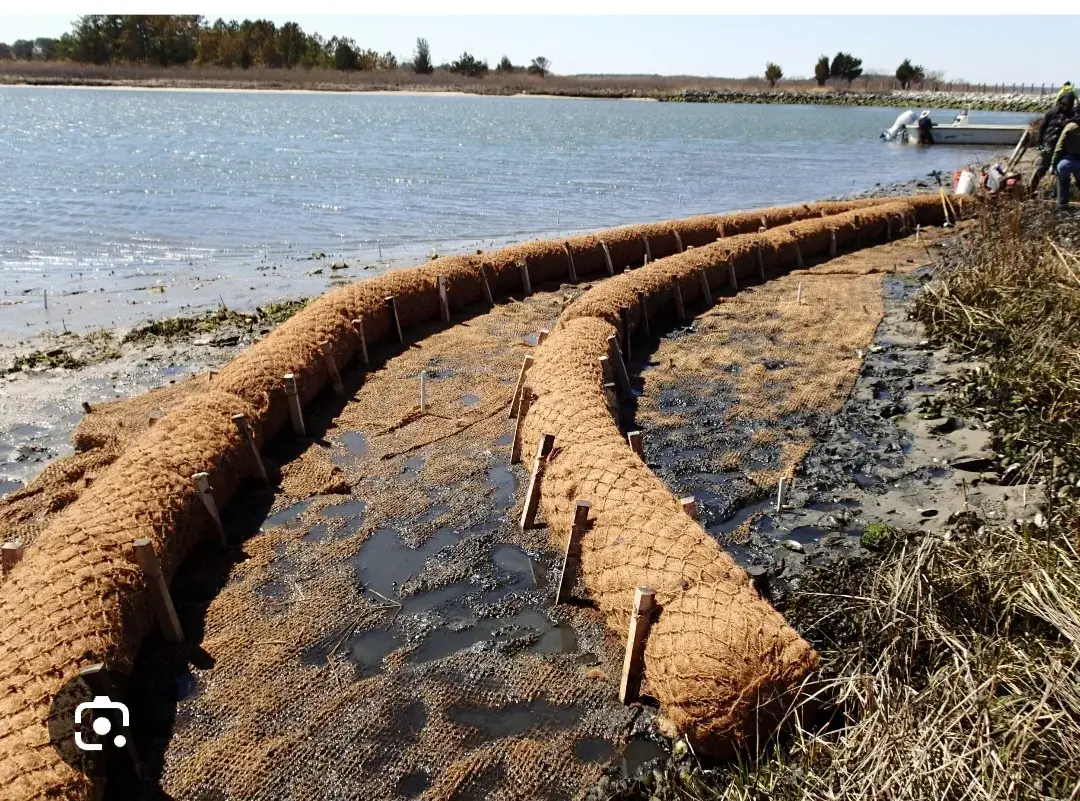
ACI rebuilds eroded retention pond and lake banks with regrading, rip rap, coir logs and the PondTech plank system, priced by the linear foot.
Retention pond bank erosion repair for Sarasota HOAs, CDDs and golf courses. $50 to $100 per linear foot. Free site walk. ACI has worked Sarasota County for 23 years, out of Venice. Free estimates, no obligation, and someone answers 24 hours a day. Text 941-445-3027.
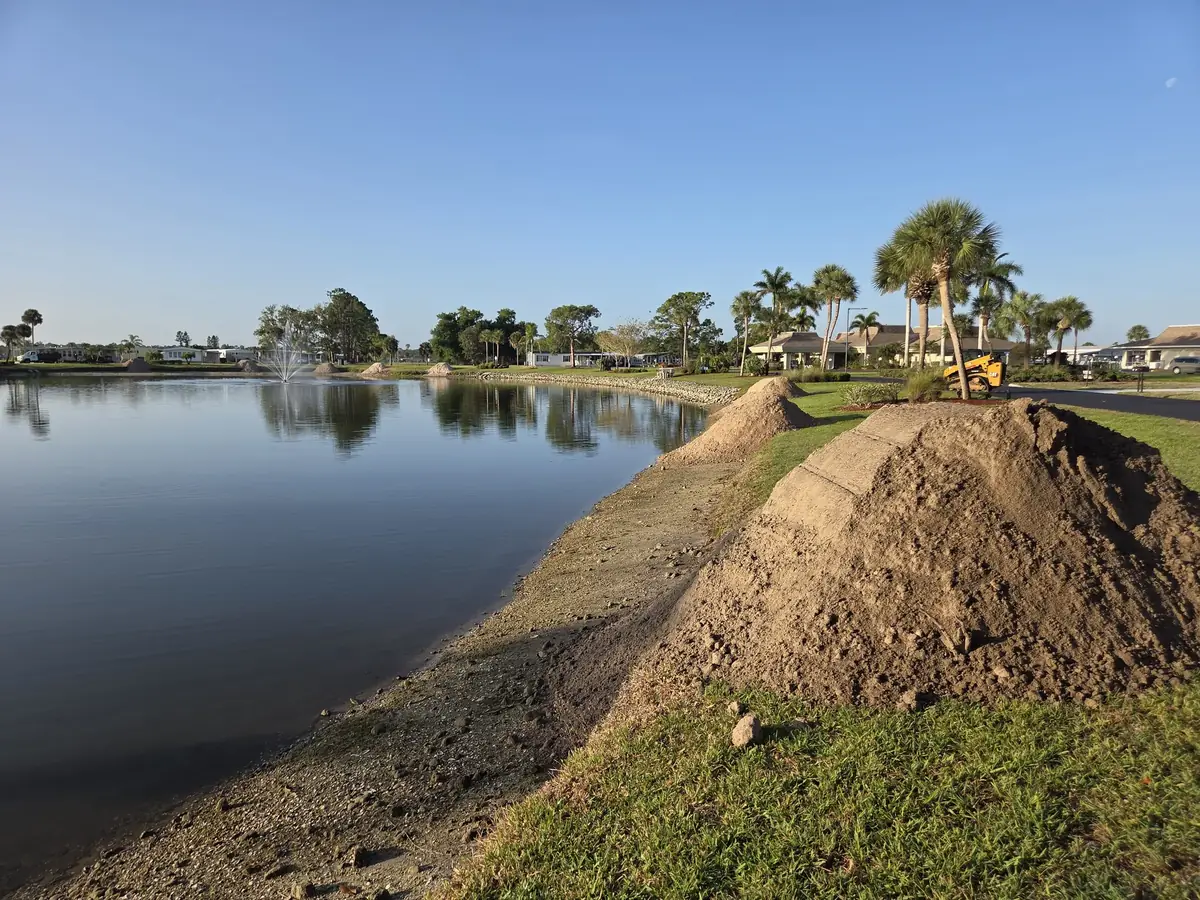
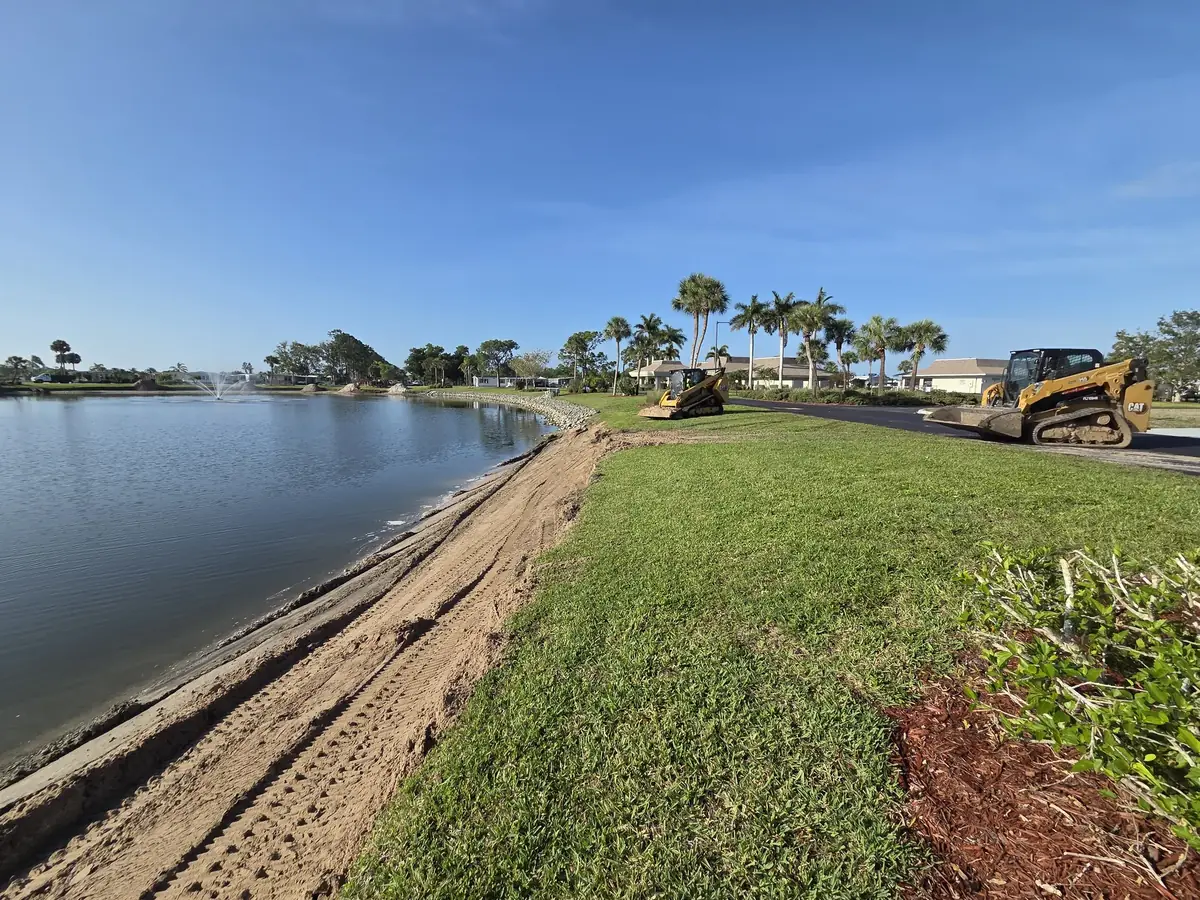
Inland Sarasota is full of water that was put there on purpose. The communities through Palmer Ranch, the ones off Clark Road and Bee Ridge Road, and the golf courses inland of the Tamiami Trail were platted around retention ponds that hold and treat their stormwater. Those banks get graded to a 4:1 slope when they are built, and they have been giving up a few inches a season ever since.
By the time a board calls us the sod is hanging over nothing, the irrigation line is exposed, and the material that used to be the bank is sitting on the bottom of the pond. On a golf course the edge has crept toward the cart path. In a residential community it is heading for somebody's lanai.
We regrade the bank back to its original slope, then fit the shoreline treatment to the site. Rip rap rock, coconut fiber logs, or the PondTech plank system, a proprietary product licensed, installed and only available through our company. Most contractors who walk your pond sell one product. We price the options side by side and let the board choose. Work runs $50 to $100 per linear foot, which is a number an association can budget against. Free site walk with no obligation. Text 941-445-3027.
A retention pond is not landscaping. It is part of your community's stormwater system, sized to hold and treat a set volume before it releases anything. When a bank erodes, the soil that leaves it does not disappear. It fills the pond, cuts the storage volume it was designed for, and makes the next heavy rain worse for everybody downstream of you.
We work for HOA boards, community development districts, golf course superintendents and property managers, and we understand how the money side runs. Pricing by the linear foot means a board can phase the job, fix the worst two hundred feet this year and budget the rest for next. Adam quotes the work and Adam is on the property when it happens. A large portion of this work is multi year repeat business, which is the only reference that really counts.
A stormwater pond is built with a gentle slope for a reason. That slope holds sod, slows runoff before it reaches the water, and keeps the edge stable. Once the bank starts to cut back the slope steepens, the sod loses its footing, and the pond fills with the material it lost.
The damage rarely stops at the waterline. Catch it early and the repair is a fraction of what it costs after the edge has moved.
There is no single right fix. It depends on how much bank is gone, how much wave action the pond takes, what the water level does through the year, and what the association has to spend. Here is what we install.
This is usually the first question a board asks and it is a fair one. A common repair around here is a sock tube filled with sand laid along the shoreline. Those tubes can split and lose their sand in five to seven years, and then the association pays for the same stretch of bank twice.
We would rather tell you up front what each option gives you. Rock does not rot. Coir is organic and is meant to hold the bank while plants take root and take over. The plank system exists because customers were tired of the repair coming back around as a line item every few years.
We price by the linear foot so the number is easy to put in front of a board. We walk the site with you or with your manager, mark what needs attention now and what can wait a season, and put it in writing. Nobody has to guess what they are voting on.
Crews arrive in uniform in clean lettered trucks, work around residents and cart traffic, and clean up at the end of the day. We carry workers compensation and general liability insurance and can send certificates before we mobilize.
Plenty of contractors bidding your pond install one thing, usually a sand filled sock tube, because it is the only thing they carry. We carry several systems and we take the time to explain each one, what it costs, and how long it should hold. Boards often find that a different approach fits the budget better than the traditional method.
We also install the PondTech plank system, which is a proprietary product licensed, installed and only available through our company. The planks go in subsurface and help move water to the pond without it causing surface erosion. It came out of watching customers react to the same erosion over and over. They wanted something that helps keep it from starting again, so we went and found it.
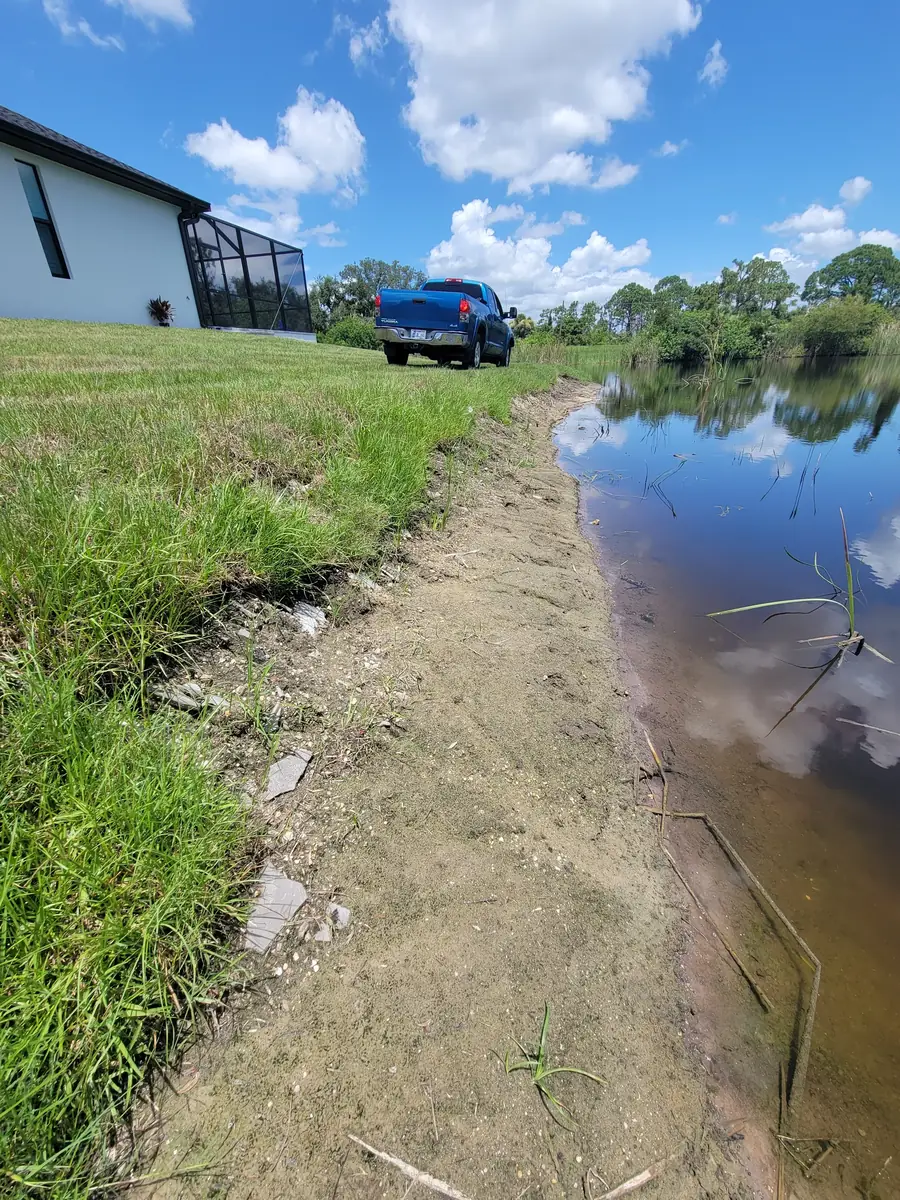
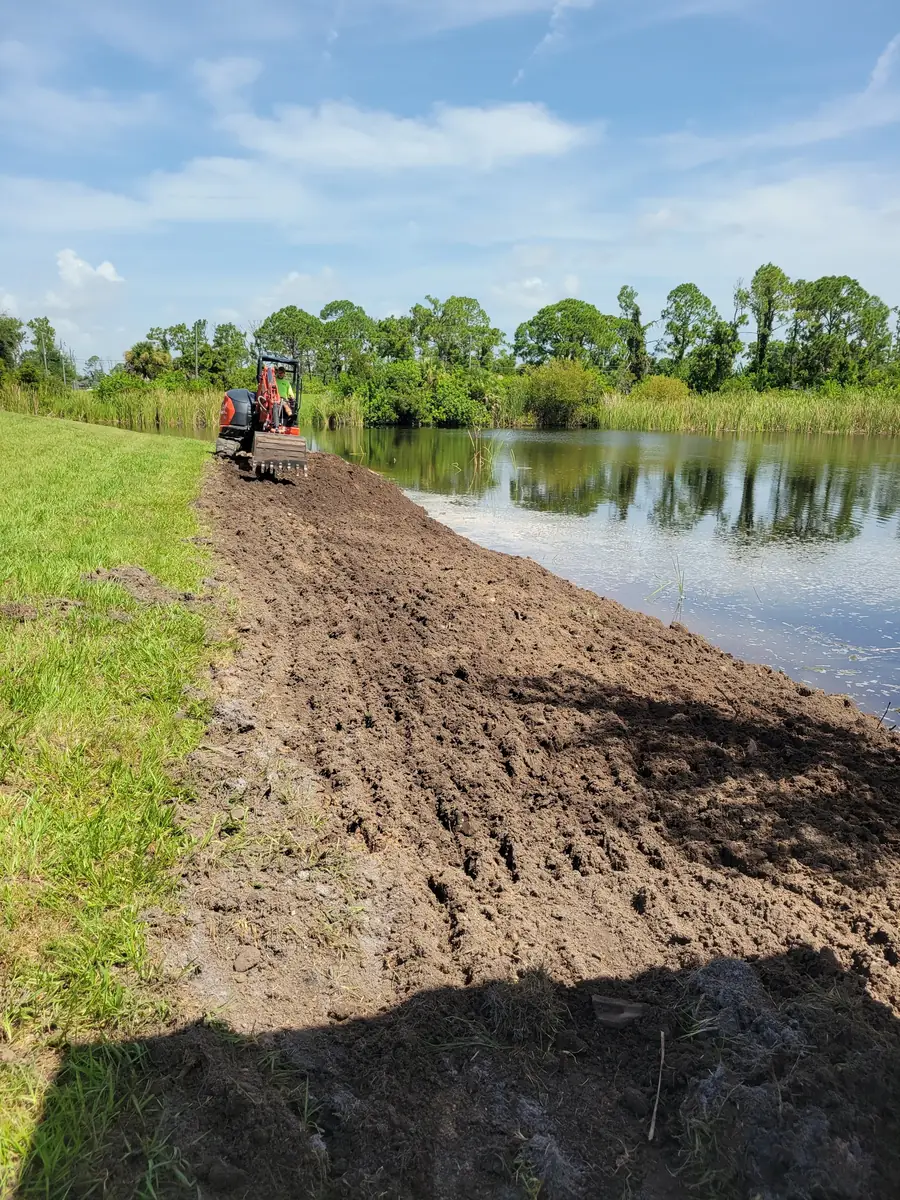
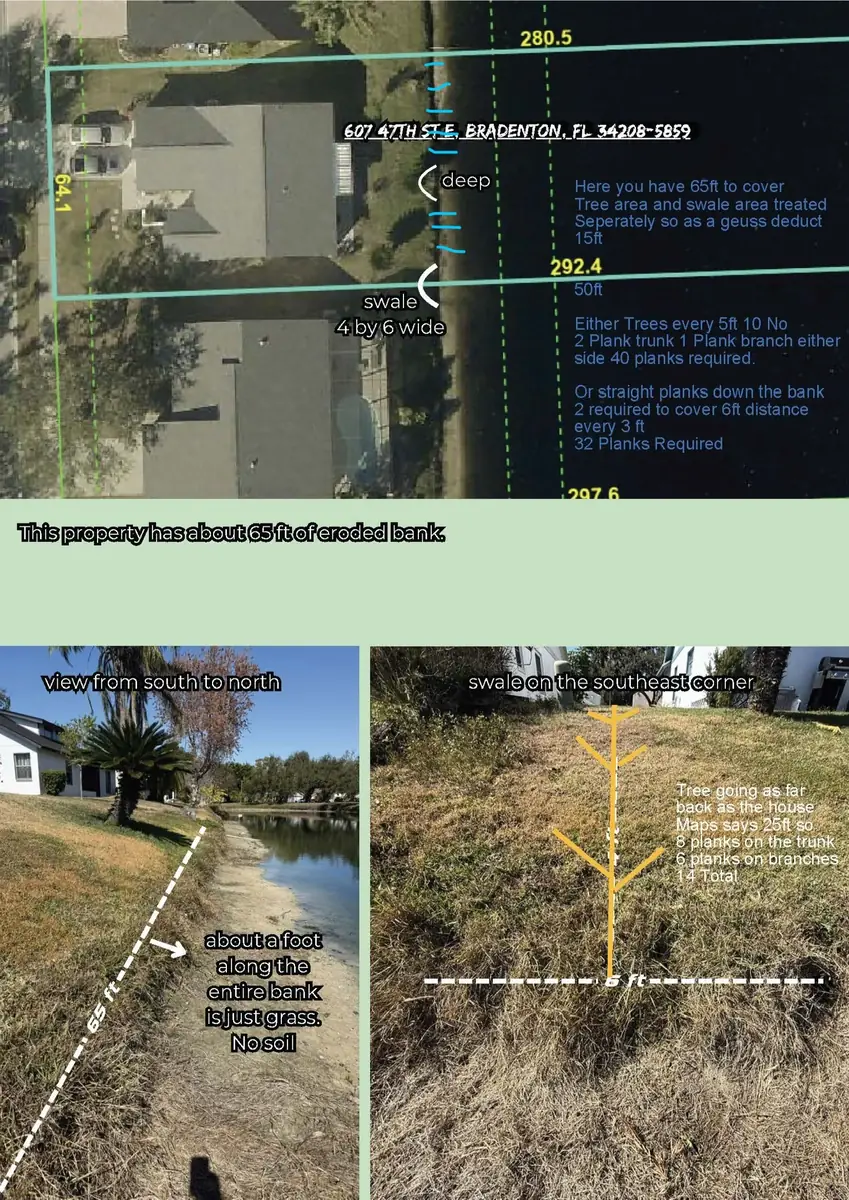
It depends on what goes in. A sand filled sock tube, which is a common install around here, can split and lose its sand in five to seven years. Rock and the PondTech plank system are built to hold up better than that. We will tell you what to expect from each option before you pick one.
Lake bank work generally runs $50 to $100 per linear foot depending on the treatment, the access, and how much fill the bank needs. We measure the run and give you a written estimate at no charge.
That is why we started installing the PondTech plank system. Regrading and rock repair the damage that is already there. The plank system goes in along the bank to help head off the next round of it. The customers who ask for it are usually tired of reacting every few years and want something proactive.
Yes. A large portion of our work is repeat business with the same communities year after year. We are used to board meetings, budget cycles, and scheduling around residents and play.
We size the equipment to the site and stay off what we do not need to touch. Anything we disturb gets put back, and the crew cleans up before it leaves. Residents will see uniformed people and lettered trucks, so there is no question who is out there.
Sometimes, depending on the water body and repair scope. We will walk the site and flag the agencies to check before work is scheduled.
It runs $50 to $100 per linear foot, depending on how much bank is gone, how equipment reaches the water, and which shoreline treatment the board picks. We measure the failing footage on the site walk and give you a written number you can take into a meeting.
Yes. Adam attends HOA and committee meetings in person. He brings the options, explains what each one costs by the foot and what it actually does, and answers the question that always comes up about splitting the work across two budget years.
It changes what is at stake more than it changes the work. The older grid north of Clark Road sits inside the Phillippi Creek basin, which drains about 57 square miles of the most built up ground in the county down to Roberts Bay behind Siesta Key. Wherever your pond sits, every inch of bank that washes into it is storage volume the pond loses. Rebuilding the bank keeps that sediment out of the system and keeps the pond doing the job it was built to do.
We work across Sarasota, Charlotte and Manatee Counties, and travel further for storm work.
Monthly lake and pond care with quarterly preserve inspections, built to control invasive plants and keep your stormwater system working.
See Lake & Preserve →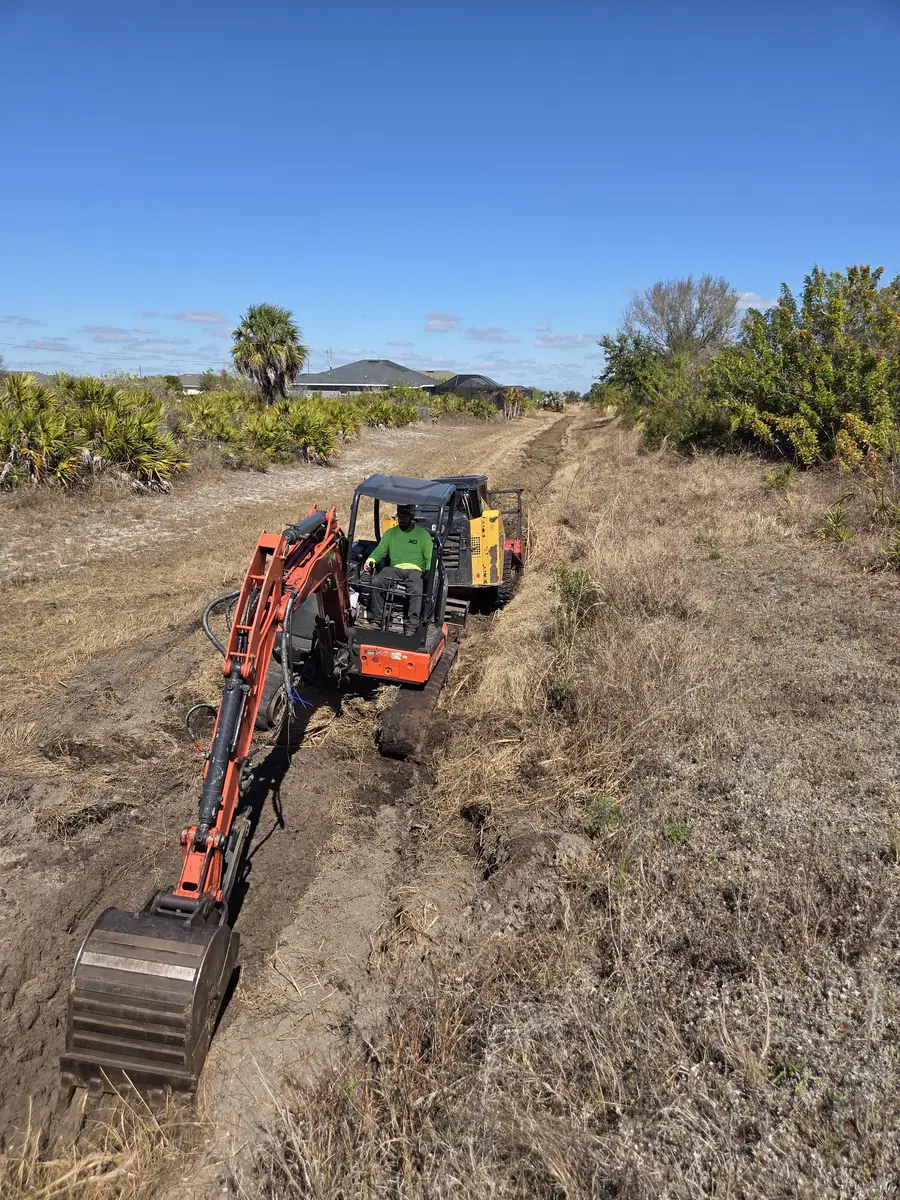
We clear years of tree growth and sediment out of neglected ditches, swales and canals so stormwater moves the way the system was built to move it.
See Drainage & Canals →
We bring in fill, set the grade and compact it, so your house pad, driveway or parking area sits on ground that drains right and stays put.
See Fill Dirt & Grading →Free, no obligation estimates. 24/7 emergency service.