
Lake & Preserve Management
Monthly lake and pond care with quarterly preserve inspections, built to control invasive plants and keep your stormwater system working.
See Lake & Preserve →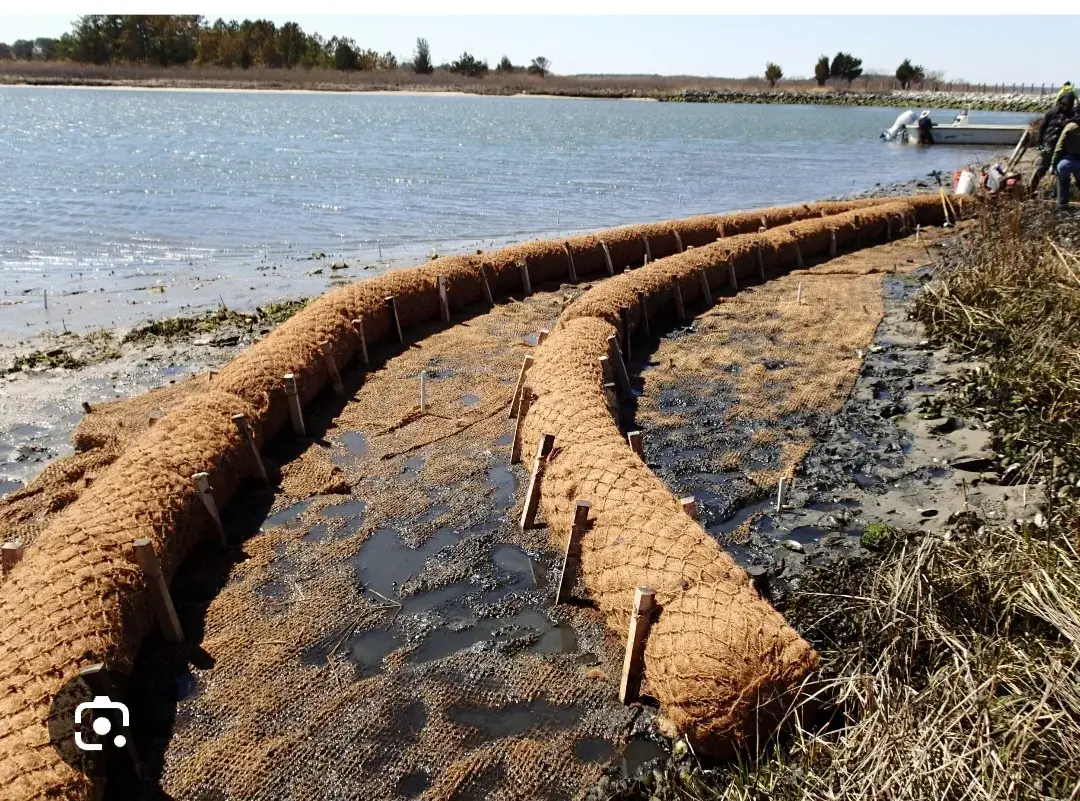
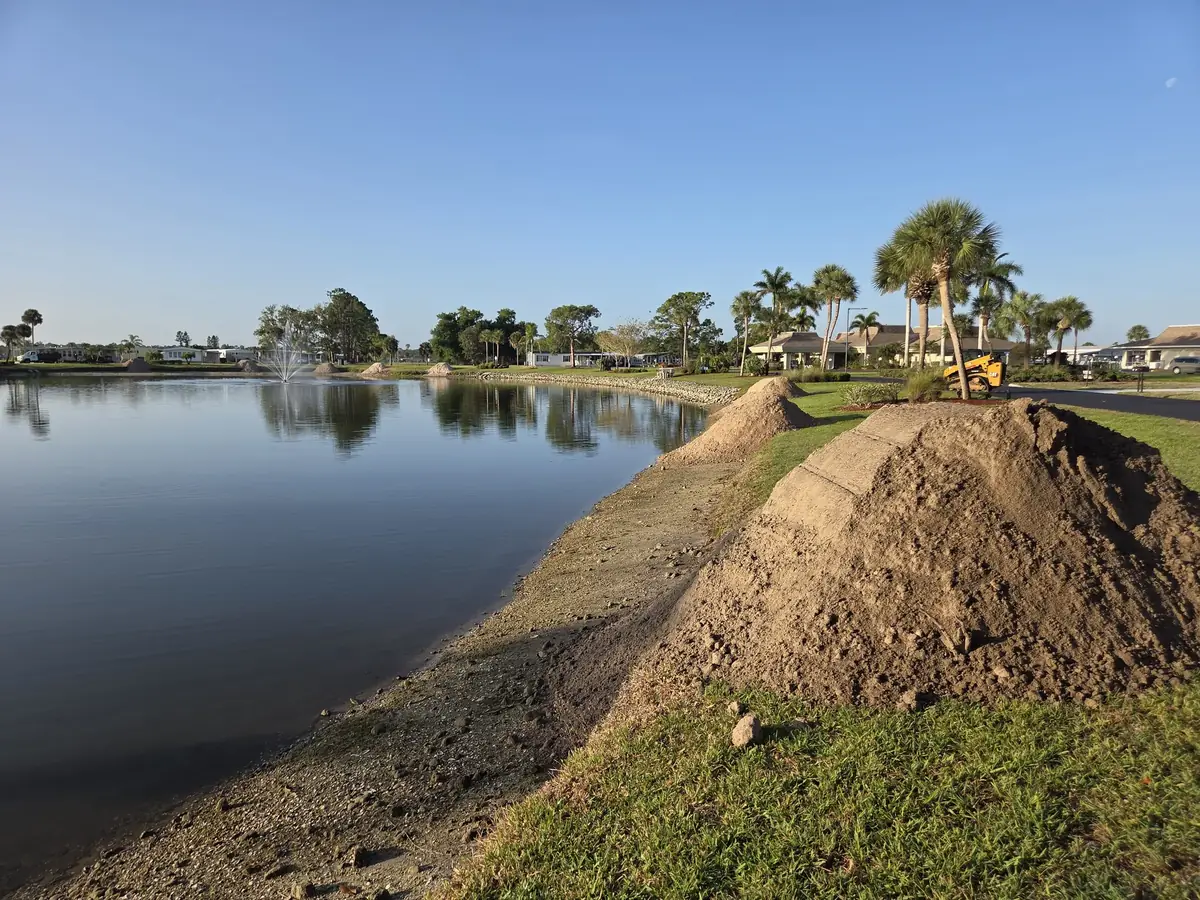
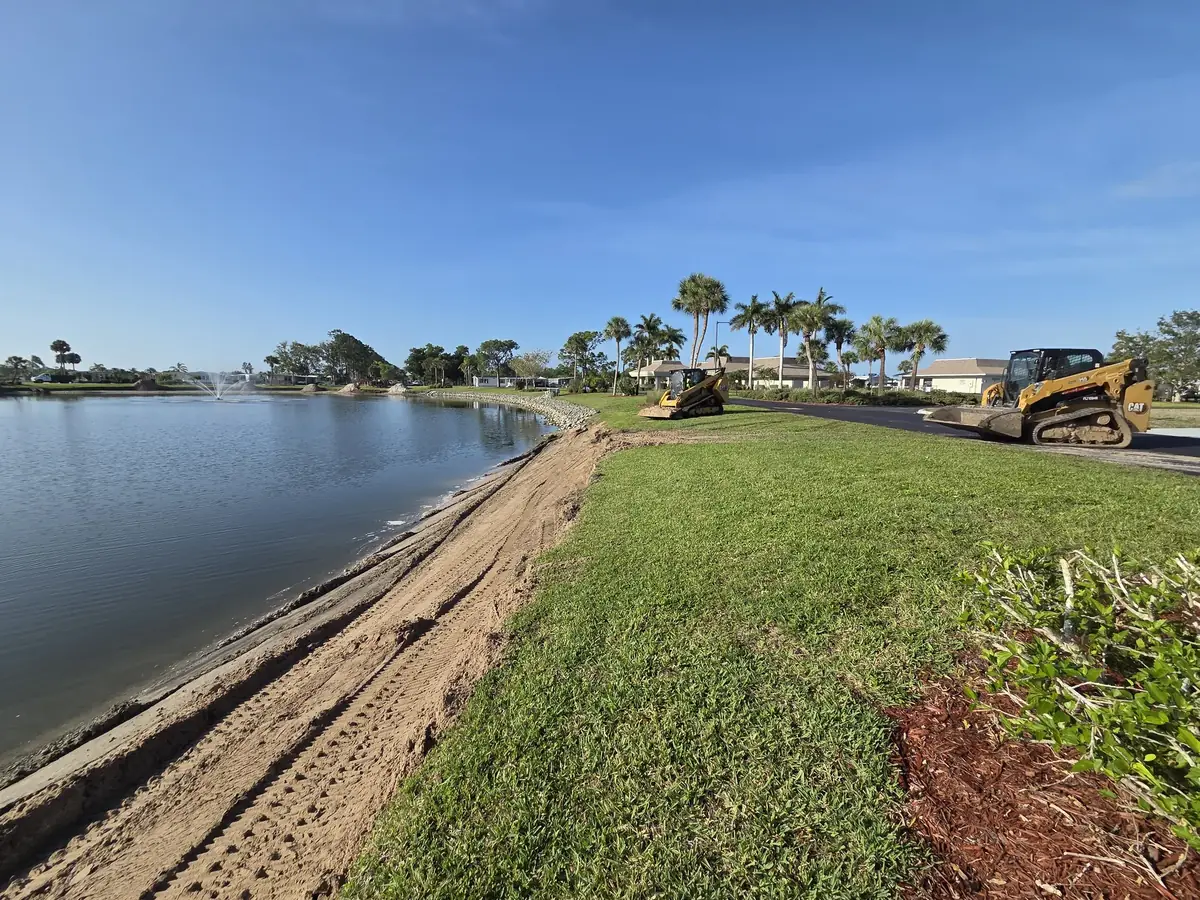
ACI rebuilds eroded retention pond and lake banks with regrading, rip rap, coir logs and the PondTech plank system, priced by the linear foot.
Lake and canal bank erosion repair in North Port. $50 to $100 per linear foot. PondTech plank system. Free estimate. We cover 34286, 34287, 34288 and the rest of North Port. ACI has worked Sarasota County for 23 years, out of Venice. No obligation, and someone answers 24 hours a day. Text 941-445-3027.
North Port gives you two kinds of failing bank and they behave differently. The first is the stormwater pond inside a community. Bobcat Trail funds its stormwater management through a Community Development District, Talon Bay was platted around its lakes and a preserve tract, and Wellen Park is threaded with dug water right through to the lake at its downtown. Those banks are cut into loose sand with a thin cap of sod. The second is the old canal bank from the original city grid, where sixty years of rising and falling water have quietly taken the toe out from under the slope.
The sand is what drives it. There is very little clay holding these banks together, so once the toe goes the whole face follows and it goes fast. What starts as a lip you can step over becomes a two foot undercut in a couple of wet seasons, and then the sod mat is hanging in mid air over nothing.
Our pricing on lake bank restoration and erosion repair runs $50 to $100 per linear foot depending on the height of the bank, the access, and what has to be rebuilt underneath. That is real pricing, not a placeholder, and you get a measured number after we walk the shoreline.
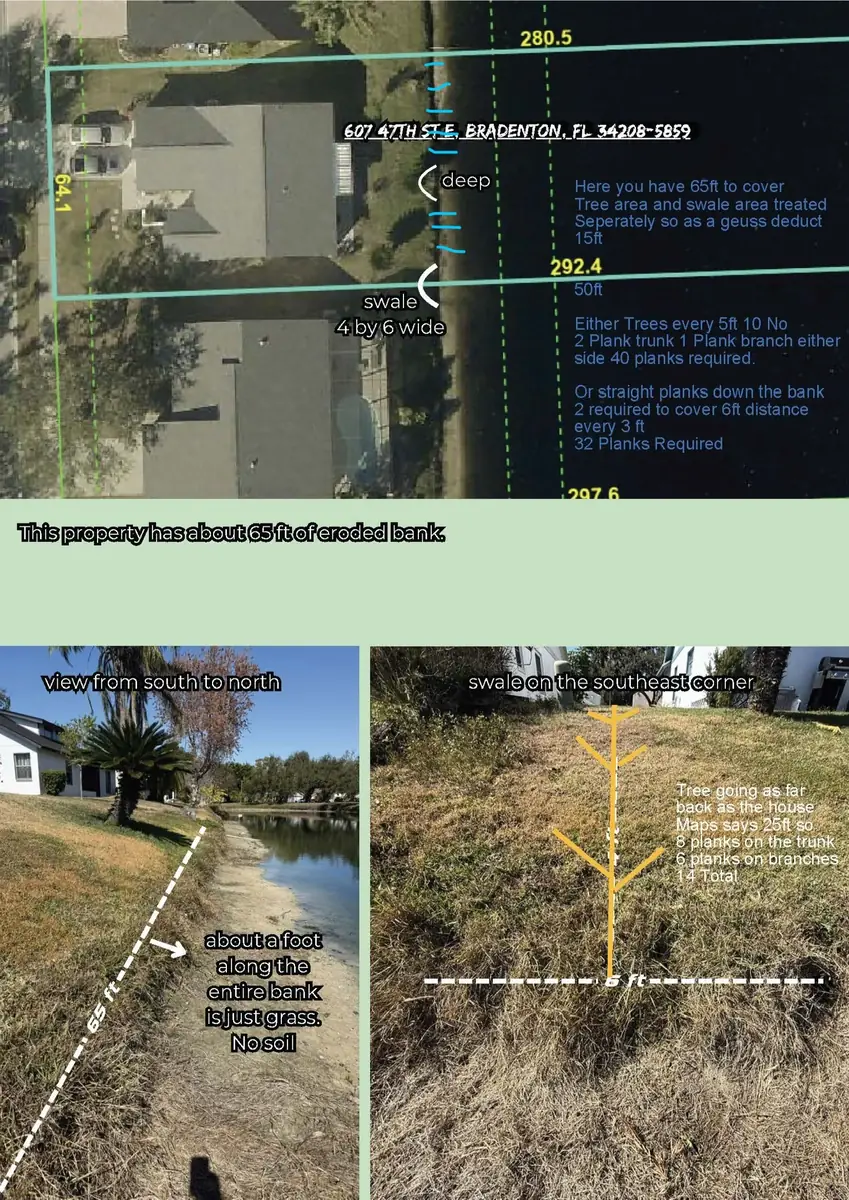
We also install the PondTech plank system, a proprietary product licensed, installed and only available through our company. Where a bank keeps failing regardless of how many times it gets regraded, planks installed subsurface hold the soil and help move water to the pond without it causing surface erosion.
Ian accelerated a lot of this. Water levels came up hard, sat high, then dropped, and every foot of bank that had been slowly undercut for years gave way at once. The city itself ended up repairing bank along the Myakkahatchee Creek afterwards. Plenty of associations here are still working through shorelines that were merely ugly before the storm and are now a genuine liability.
The everyday causes are less dramatic. Mowers running too close and cutting the edge back. Sprinklers running down the face. Stormwater coming off a street or a downspout in a concentrated stream instead of sheet flow. Wind fetch across a long open pond hitting the same section over and over. Once you know which one is doing it, the repair holds. If you only regrade and walk away, you are doing it again in three years.
For boards this is also a numbers question. A shoreline that keeps eating into a rear lot line becomes a dispute with a homeowner, and eventually a survey problem. Fixing it once, properly, is the cheaper end of that.
A stormwater pond is built with a gentle slope for a reason. That slope holds sod, slows runoff before it reaches the water, and keeps the edge stable. Once the bank starts to cut back the slope steepens, the sod loses its footing, and the pond fills with the material it lost.
The damage rarely stops at the waterline. Catch it early and the repair is a fraction of what it costs after the edge has moved.
There is no single right fix. It depends on how much bank is gone, how much wave action the pond takes, what the water level does through the year, and what the association has to spend. Here is what we install.
This is usually the first question a board asks and it is a fair one. A common repair around here is a sock tube filled with sand laid along the shoreline. Those tubes can split and lose their sand in five to seven years, and then the association pays for the same stretch of bank twice.
We would rather tell you up front what each option gives you. Rock does not rot. Coir is organic and is meant to hold the bank while plants take root and take over. The plank system exists because customers were tired of the repair coming back around as a line item every few years.
We price by the linear foot so the number is easy to put in front of a board. We walk the site with you or with your manager, mark what needs attention now and what can wait a season, and put it in writing. Nobody has to guess what they are voting on.
Crews arrive in uniform in clean lettered trucks, work around residents and cart traffic, and clean up at the end of the day. We carry workers compensation and general liability insurance and can send certificates before we mobilize.
Plenty of contractors bidding your pond install one thing, usually a sand filled sock tube, because it is the only thing they carry. We carry several systems and we take the time to explain each one, what it costs, and how long it should hold. Boards often find that a different approach fits the budget better than the traditional method.
We also install the PondTech plank system, which is a proprietary product licensed, installed and only available through our company. The planks go in subsurface and help move water to the pond without it causing surface erosion. It came out of watching customers react to the same erosion over and over. They wanted something that helps keep it from starting again, so we went and found it.
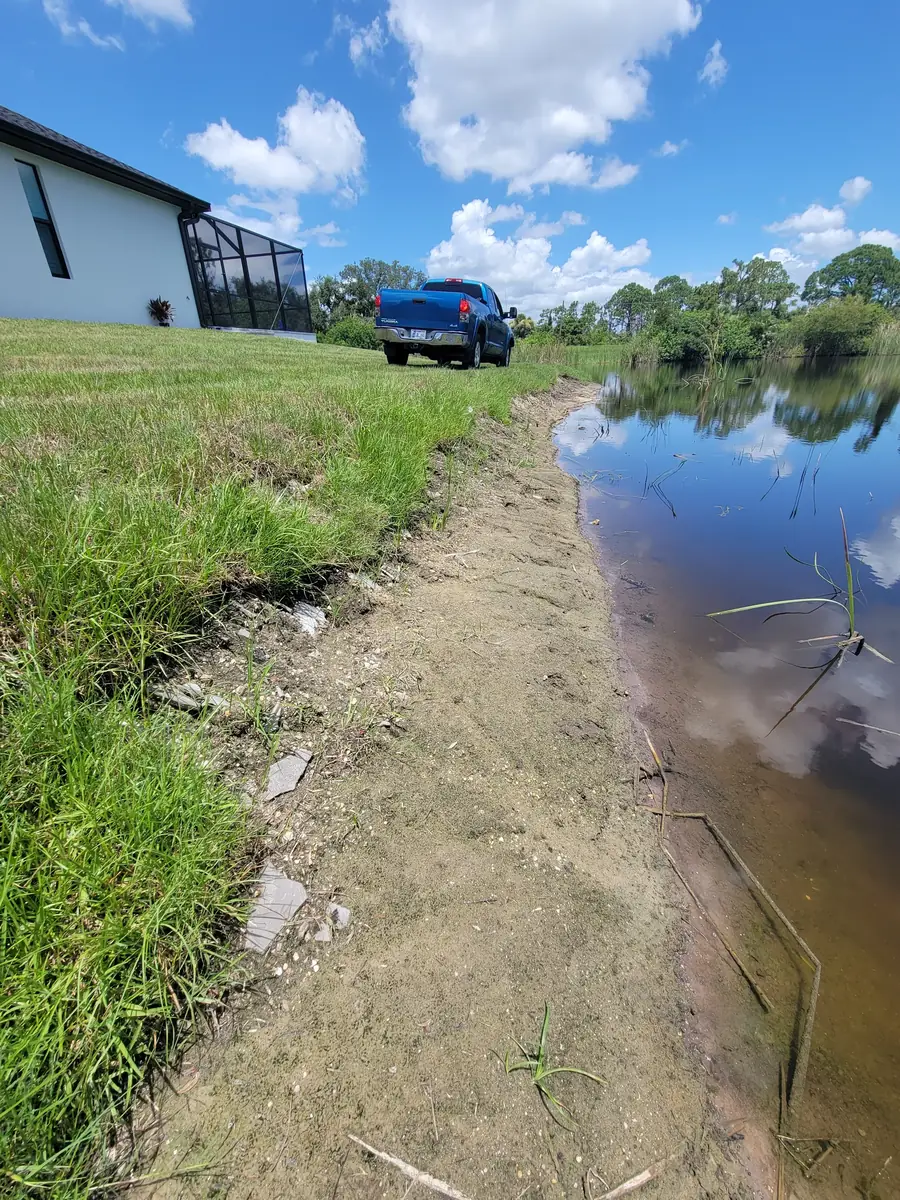
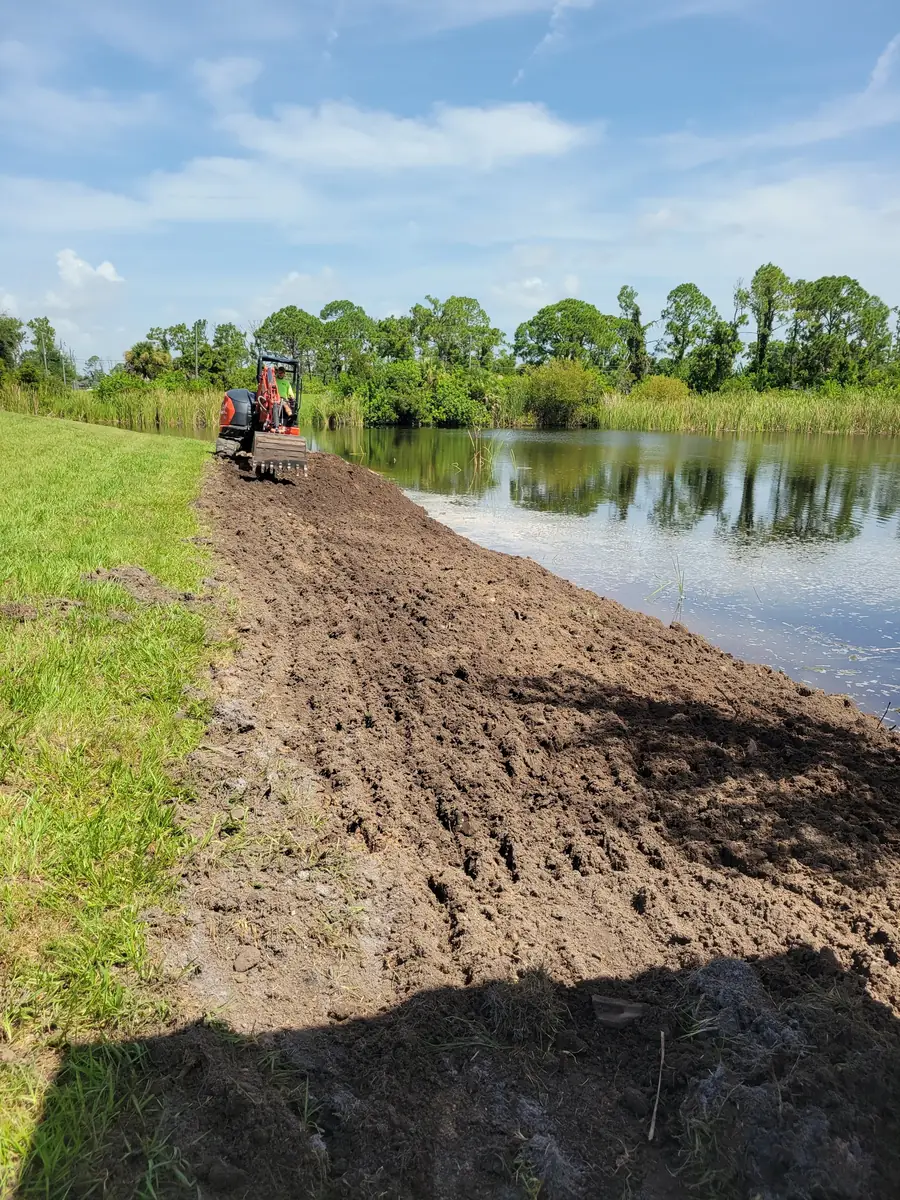
It depends on what goes in. A sand filled sock tube, which is a common install around here, can split and lose its sand in five to seven years. Rock and the PondTech plank system are built to hold up better than that. We will tell you what to expect from each option before you pick one.
Lake bank work generally runs $50 to $100 per linear foot depending on the treatment, the access, and how much fill the bank needs. We measure the run and give you a written estimate at no charge.
That is why we started installing the PondTech plank system. Regrading and rock repair the damage that is already there. The plank system goes in along the bank to help head off the next round of it. The customers who ask for it are usually tired of reacting every few years and want something proactive.
Yes. A large portion of our work is repeat business with the same communities year after year. We are used to board meetings, budget cycles, and scheduling around residents and play.
We size the equipment to the site and stay off what we do not need to touch. Anything we disturb gets put back, and the crew cleans up before it leaves. Residents will see uniformed people and lettered trucks, so there is no question who is out there.
Sometimes, depending on the water body and repair scope. We will walk the site and flag the agencies to check before work is scheduled.
Lake bank restoration and erosion repair runs $50 to $100 per linear foot. Where you land depends on how high the bank is, how bad the undercut has got, whether a machine can reach the shoreline without crossing somebody's lawn, and whether you want a regrade or a plank wall. We measure the run and give the board a number it can vote on.
It is a plank system installed subsurface that holds the soil and helps move water to the pond without it causing surface erosion. It is a proprietary product licensed, installed and only available through our company. It is the answer for shorelines that have already been regraded once or twice and keep failing, and for banks that sit tight against a rear lot line where there is no room to lose any more ground.
Very. High water sitting against a bank that was already undercut, then dropping away, took out a lot of shoreline across North Port at once. We will inspect the toe and show whether Ian exposed an older erosion problem.
We work across Sarasota, Charlotte and Manatee Counties, and travel further for storm work.
Monthly lake and pond care with quarterly preserve inspections, built to control invasive plants and keep your stormwater system working.
See Lake & Preserve →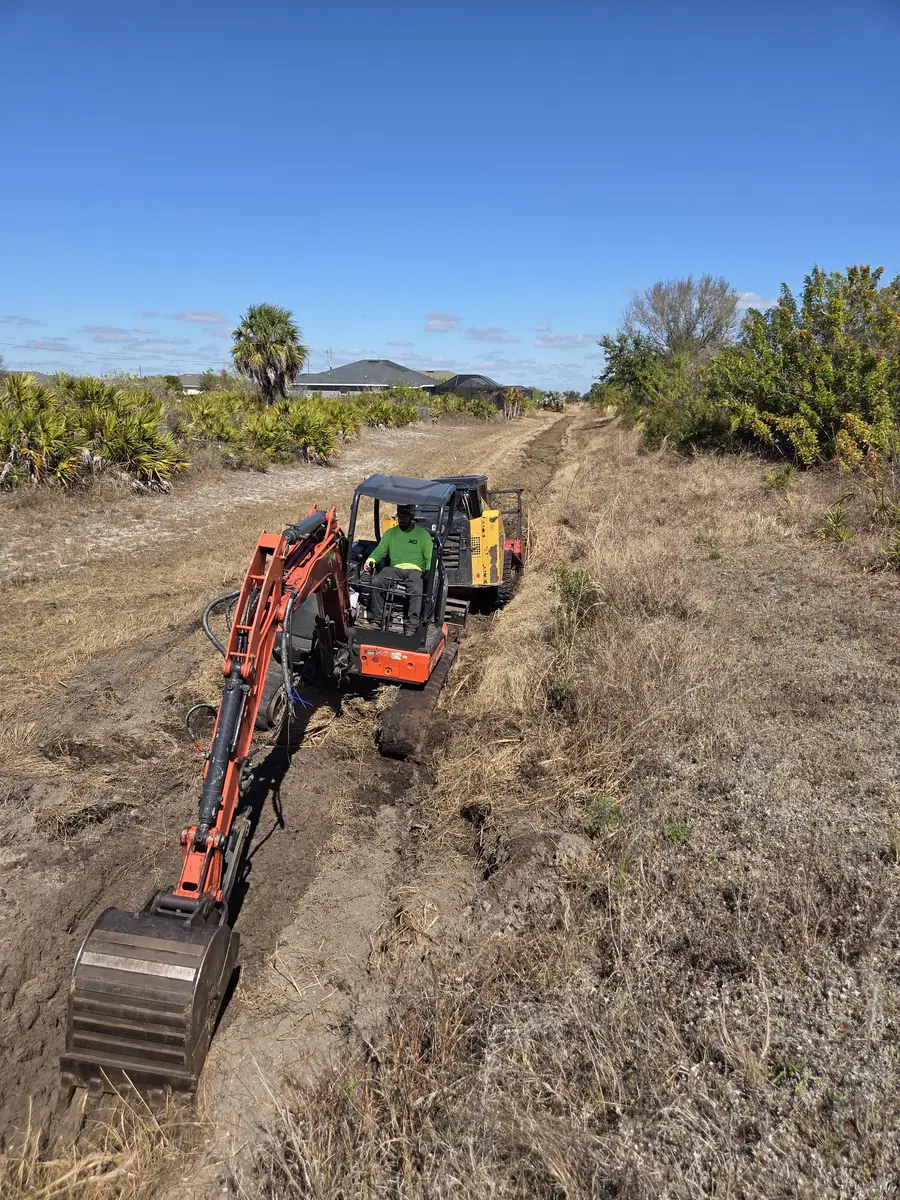
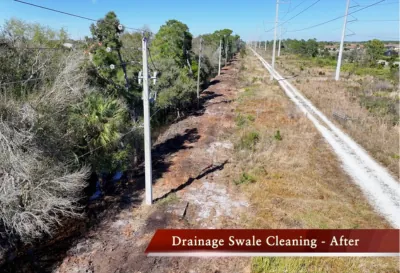
We clear years of tree growth and sediment out of neglected ditches, swales and canals so stormwater moves the way the system was built to move it.
See Drainage & Canals →
We bring in fill, set the grade and compact it, so your house pad, driveway or parking area sits on ground that drains right and stays put.
See Fill Dirt & Grading →Free, no obligation estimates. 24/7 emergency service.